
A medical website is the single most important digital asset a doctor or clinic controls. It's where patients land after finding you on Google, after seeing your reviews on Practo, after watching your podcast on YouTube. What they find when they arrive — how fast it loads, how easy it is to book, how credible it feels on a mid-range Android phone — decides whether they call or leave. DoubleSure builds medical websites for doctors, clinics, hospitals, and diagnostic centers across India. Every site is mobile-first, appointment-optimized, SEO-ready, and built around how Indian patients actually behave online.
Most doctors in India have a website. Very few have a website that actually works.
A website that works isn't measured by how it looks on a desktop screen. It's measured by how many patients it converts — how many people who land on it, after finding you through Google, a referral, a podcast, or a WhatsApp forward, actually pick up the phone or tap the booking button. By that measure, most medical websites in India fail quietly, every day, without the doctor ever knowing.
The reasons are predictable. The site loads in seven seconds on a mid-range phone — patients leave after three. The only CTA is a generic "Contact Us" buried in the footer. There's no booking system, so patients have to call during working hours they don't have time for. The doctor's credentials are buried in an "About Us" page nobody reads. There's no procedure-specific content, so the site ranks for nothing. There's no schema markup, so Google doesn't understand what kind of practice it is.
DoubleSure builds medical websites that solve all of these problems from the ground up. Not template-flipped healthcare sites. Not WordPress themes with a doctor's photo pasted in. Structured, SEO-ready, appointment-optimized digital practices — built around how Indian patients search for and evaluate doctors today.
We've built personal brand websites for individual doctors, full diagnostic center platforms with test booking and package e-commerce, medical conference registration sites, paramedical institute course enrollment portals, specialty patient discovery platforms, and pharmaceutical brand websites. Healthcare web infrastructure is what we do.
Three patterns explain why most medical websites in India don't work.
Over 80% of healthcare searches in India happen on mobile, often on mid-range Android phones on 4G connections. A site that loads in 5-7 seconds loses most of its visitors before they ever see the doctor's name. Speed isn't a nice-to-have on a medical website. It's the difference between a patient who books and a patient who opened your competitor instead.
Most medical websites have a contact form, a phone number, and an email address. That's not a booking system — that's a barrier. Patients looking for a doctor at 11pm on a Sunday don't want to fill a form and wait for a callback. They want to confirm an appointment. Every day a medical website doesn't have a real booking pathway, it's quietly losing patients to whoever does.
Most medical websites have a homepage, an about page, and a contact page. That structure ranks for nothing because Google needs specific signals to understand what a medical practice does — procedure-specific pages, local SEO architecture, schema markup that identifies the business as a medical entity, and content structured around how patients actually search. Without these, a website is invisible.
DoubleSure builds around all three of these realities.
Every site we build is designed on mobile first and desktop second. Not because it's a technical best practice but because over 80% of your patients will first see your website on their phone. We design for mid-range Android screens, for thumb navigation, for the moment a patient is searching in pain at 10pm. The desktop version follows from the mobile design — not the other way around. (See: how Indian doctors should approach content marketing in 2026)
We integrate appointment booking directly into the website — WhatsApp booking, phone click-to-call, form-based appointment requests, and where relevant, calendar integration and Calendly or Practo booking links. Every page has a visible, accessible booking CTA that doesn't require the patient to hunt for it. The booking path is the most important element on the page. We design around it.
Patients evaluate doctors before they book. They read qualifications, check hospital affiliations, look for publications and recognition. A doctor profile page built correctly — credentials, fellowship training, hospital affiliations, notable procedures, patient testimonials, media coverage — becomes one of the highest-converting pages on the site. We write and structure doctor profile pages that do this job properly, in the language patients actually understand.
Generic service pages rank for nothing because every diagnostic center and clinic says the same thing. Procedure-specific pages built with the right keyword architecture, patient-friendly explanations, structured FAQs, and local SEO integration rank for the queries patients actually type — "CT scan center near me," "MRI for brain in Ghaziabad," "best physiotherapy for sports injury Noida." We build these pages for every procedure that matters to your practice. (See: DoubleSure specialty discovery platforms)
Every page is built with local SEO baked in from day one. The right schema markup. Location-specific title tags and meta descriptions. Google Business Profile integration. NAP consistency across the site. Clinic location pages if you have multiple branches. Structured breadcrumbs. Canonical tags. Sitemaps. All of this is standard in every site we build — not an add-on that gets done later.
For diagnostic centers and multi-specialty hospitals, we build test booking and package purchase functionality directly into the website. Patients can search for a test, check the price, book a home collection or walk-in slot, and pay online. This is the functionality that turns a diagnostic center website from a brochure into a revenue channel. We've built this for multiple diagnostic centers in Delhi NCR.
We build for a page load time under 2.5 seconds on a mid-range 4G Android device. Image compression, next-gen formats, lazy loading, minimal render-blocking scripts, font optimization. We test every site on real mid-range devices before launch, not just on fast connections in an office. Speed is measured in patient decisions, not PageSpeed scores.
We connect the website to your Google Business Profile properly — consistent NAP, verified website link, embedded Maps, service schema that matches your GBP categories, and a review section that pulls live Google ratings. This two-way integration between the website and the GBP profile strengthens both.
Every site we build includes the full schema markup stack — MedicalBusiness or Physician entity schema, FAQPage, BreadcrumbList, LocalBusiness, Service schema for each specialty, and AggregateRating schema for the review section. This structured data is what allows Google to surface your site in rich results, AI engines to cite your practice, and voice search to find you.
Medical websites need to stay current — new doctors, new services, updated hours, new patient reviews, regulatory changes. We provide ongoing support and maintenance as a standing service — content updates, performance monitoring, uptime alerts, security patches, and quarterly SEO audits. Your website doesn't go live and get forgotten.
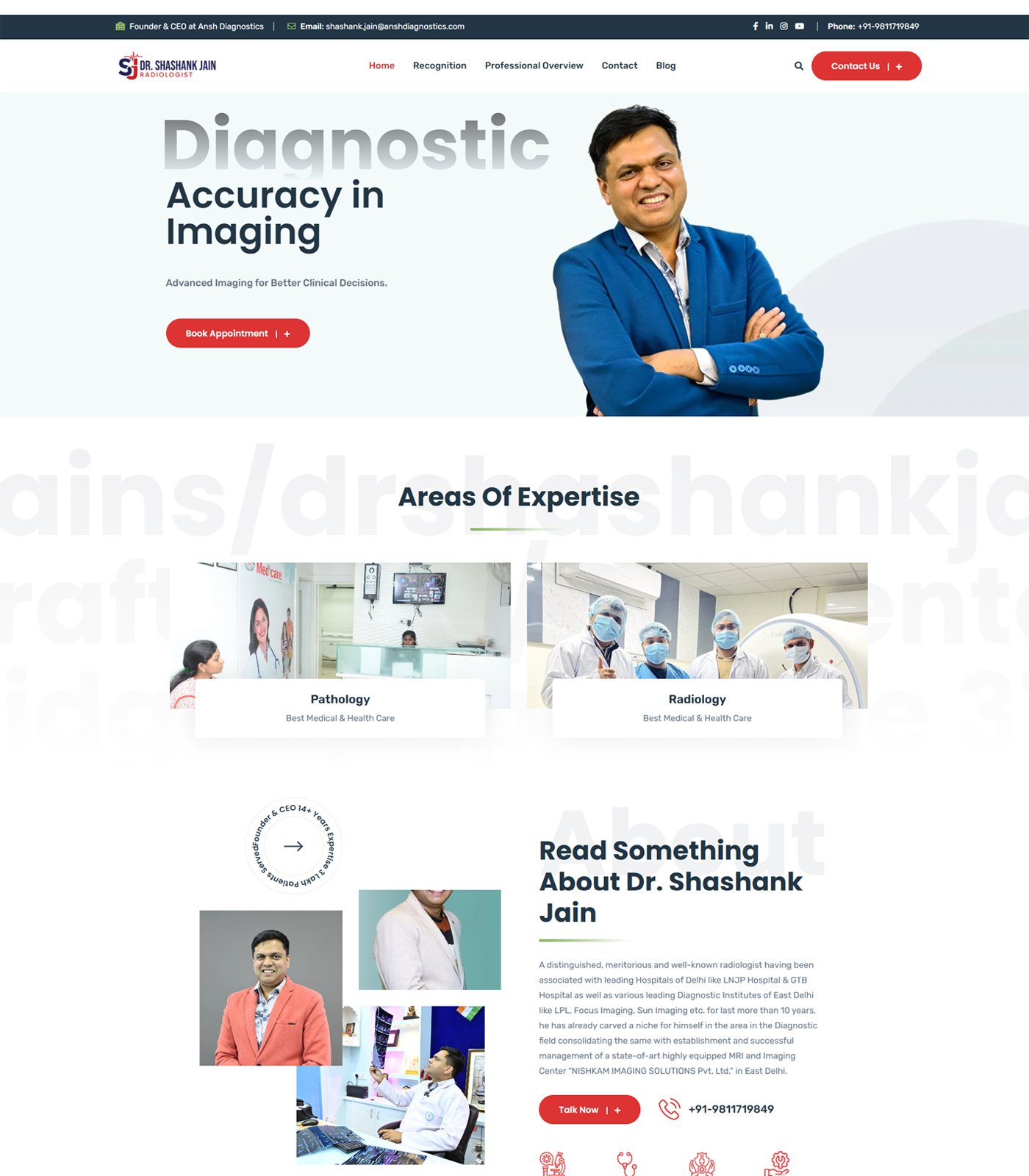
Personal brand website for the Founder & CEO of Ansh Diagnostics. Credentials, procedure pages, appointment booking, Physician schema.
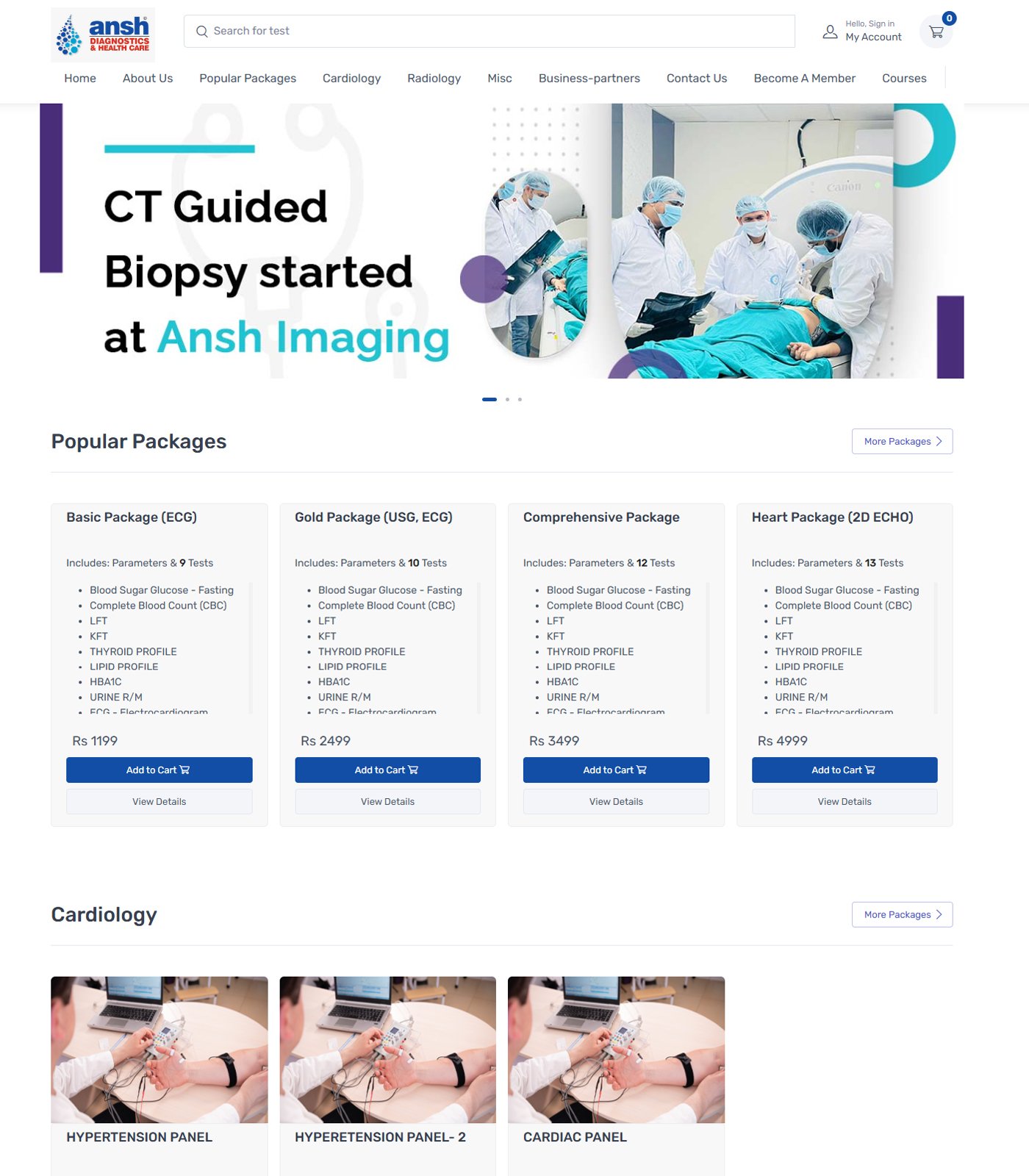
Full diagnostic center platform with test booking, package e-commerce, home sample collection, and department pages.
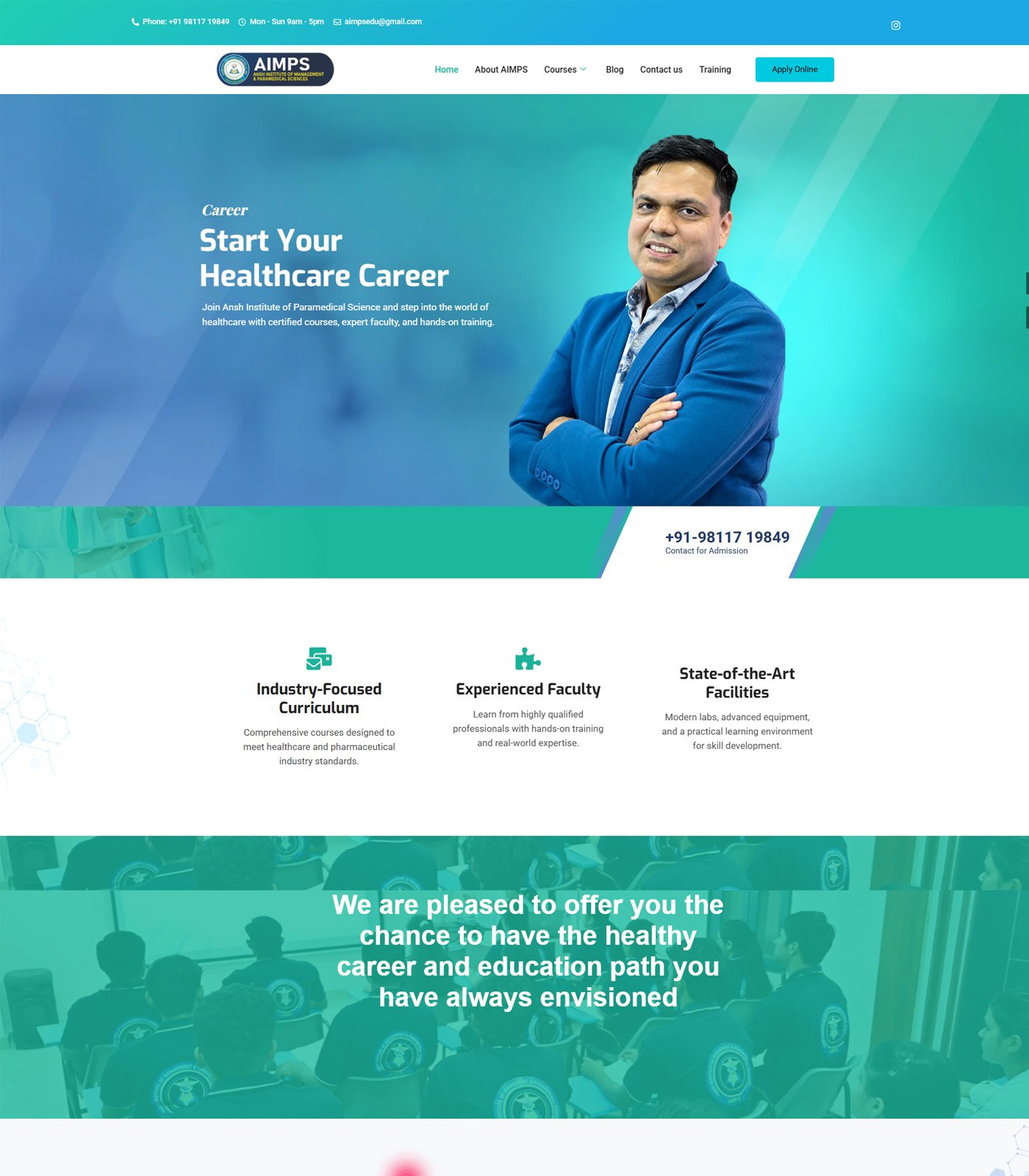
Paramedical institute enrollment website covering 20+ courses in MLT, Radiology, OT, Yoga, and healthcare administration.
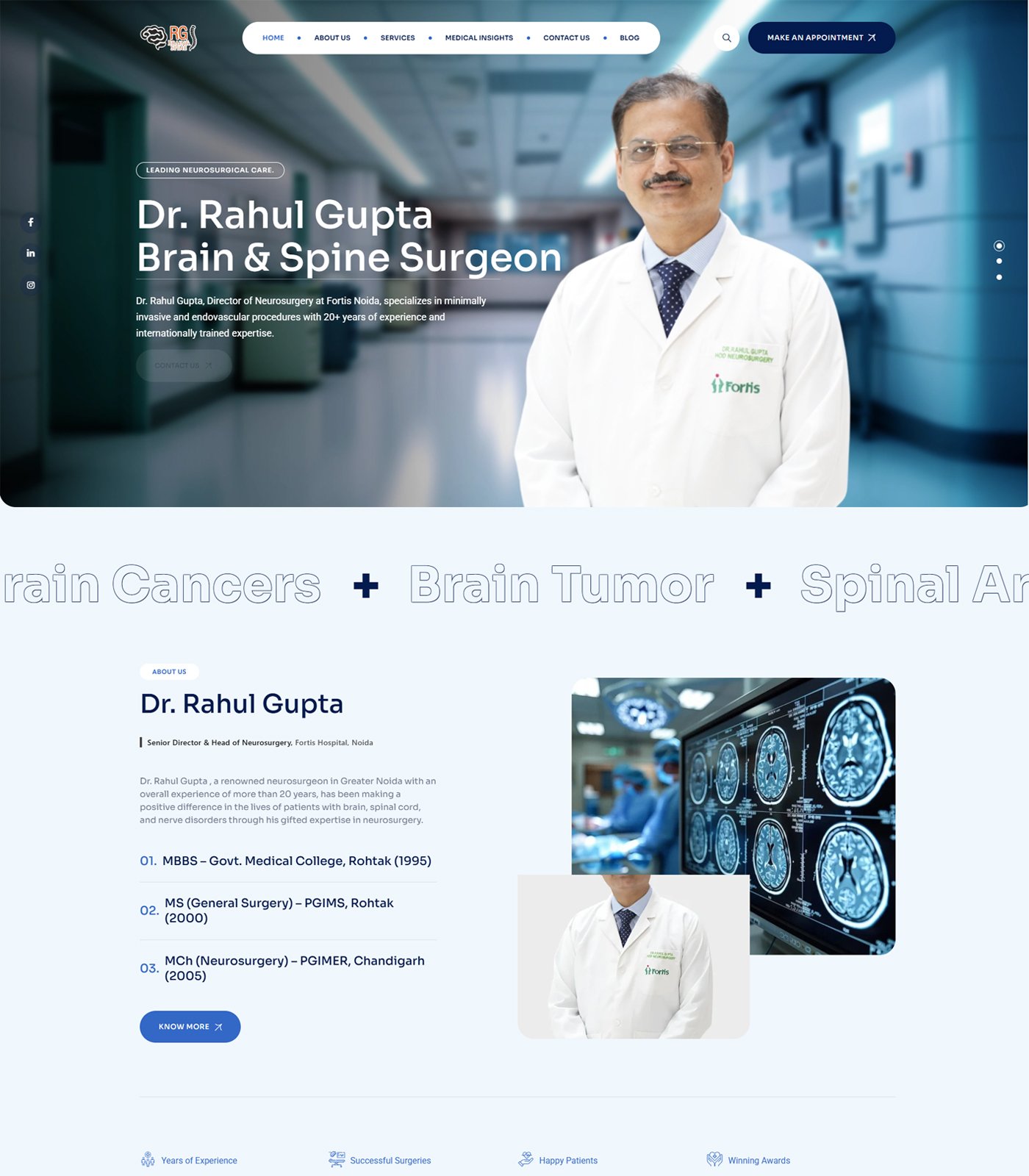
Neurosurgeon personal brand site with procedure pages, hospital affiliations, and appointment integration.
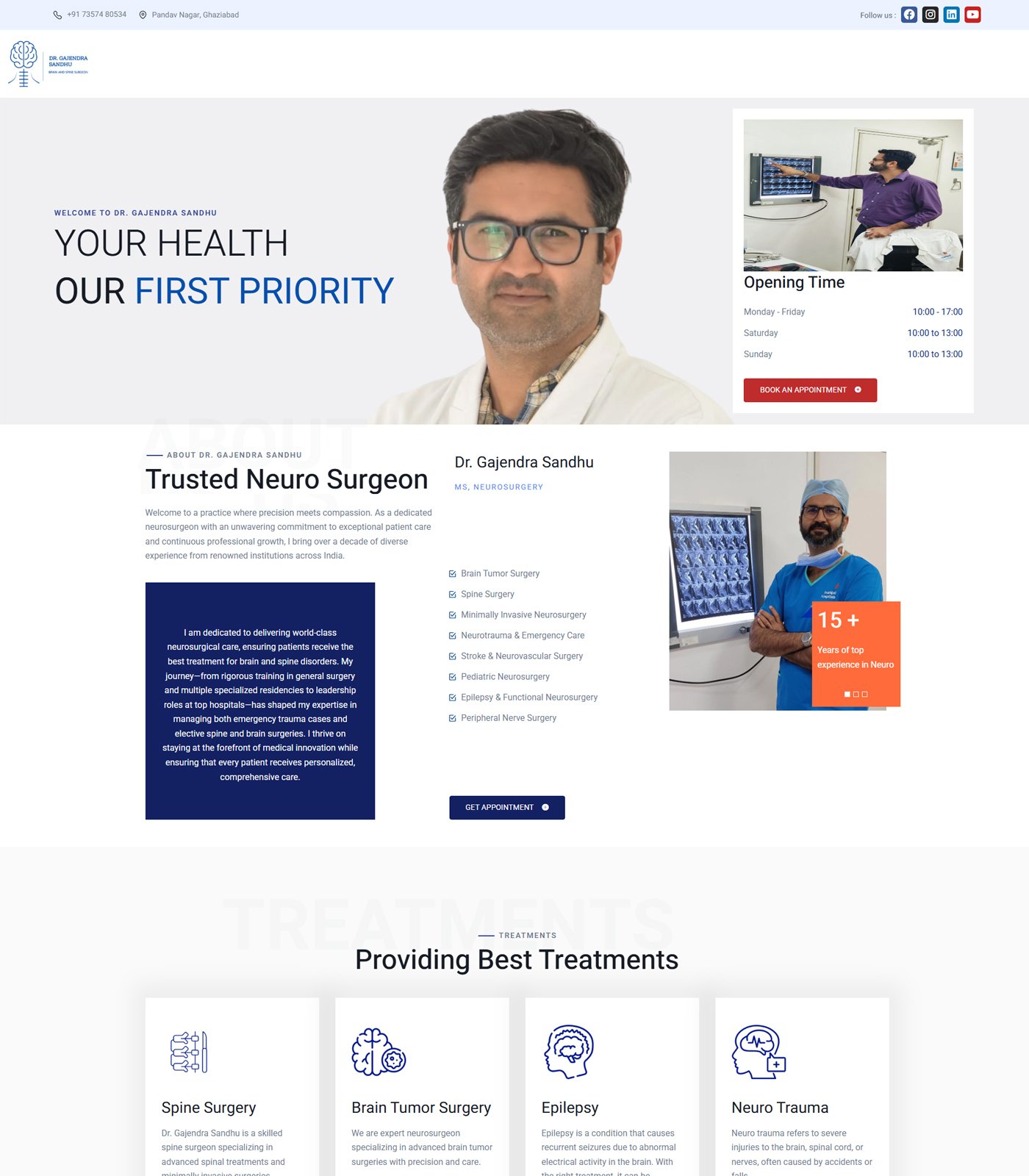
Neurosurgeon website with clinical overview, appointment booking, and Google Maps integration.
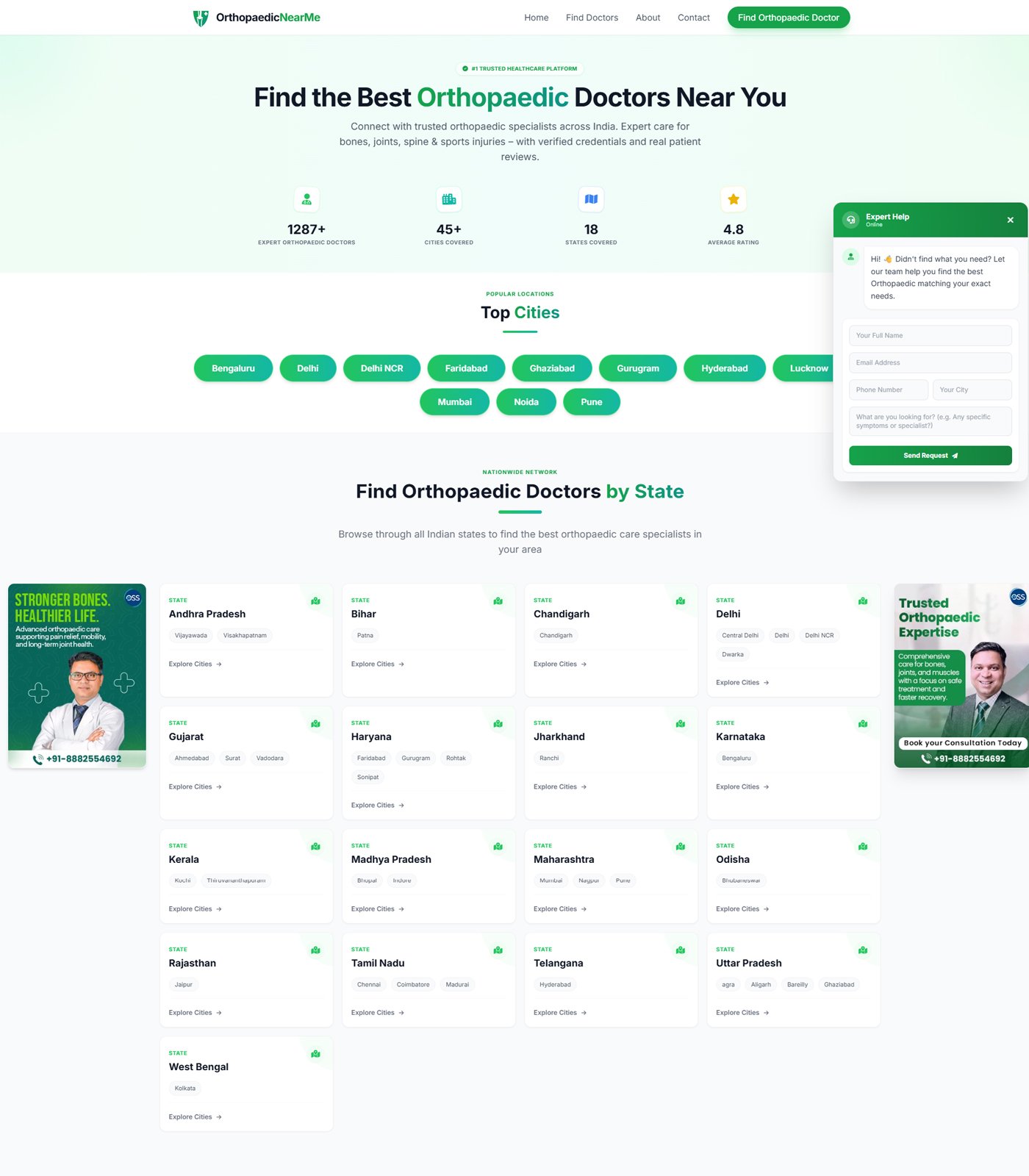
Specialty patient discovery platform for orthopaedic specialists. 1,287+ doctors, 45+ cities, 18 states covered.
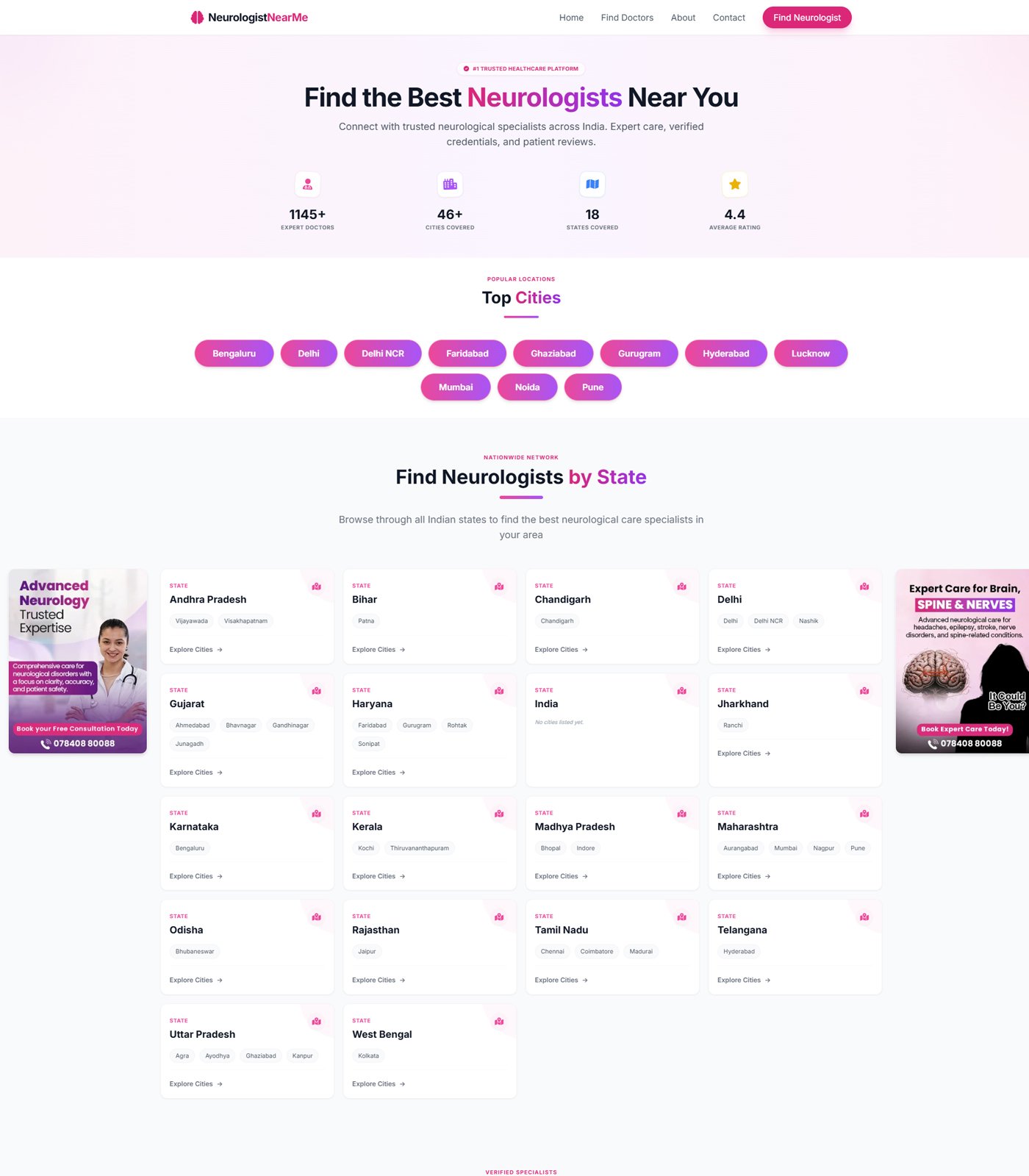
High-intent neurologist discovery platform. 1,145+ expert doctors, 46+ cities covered.
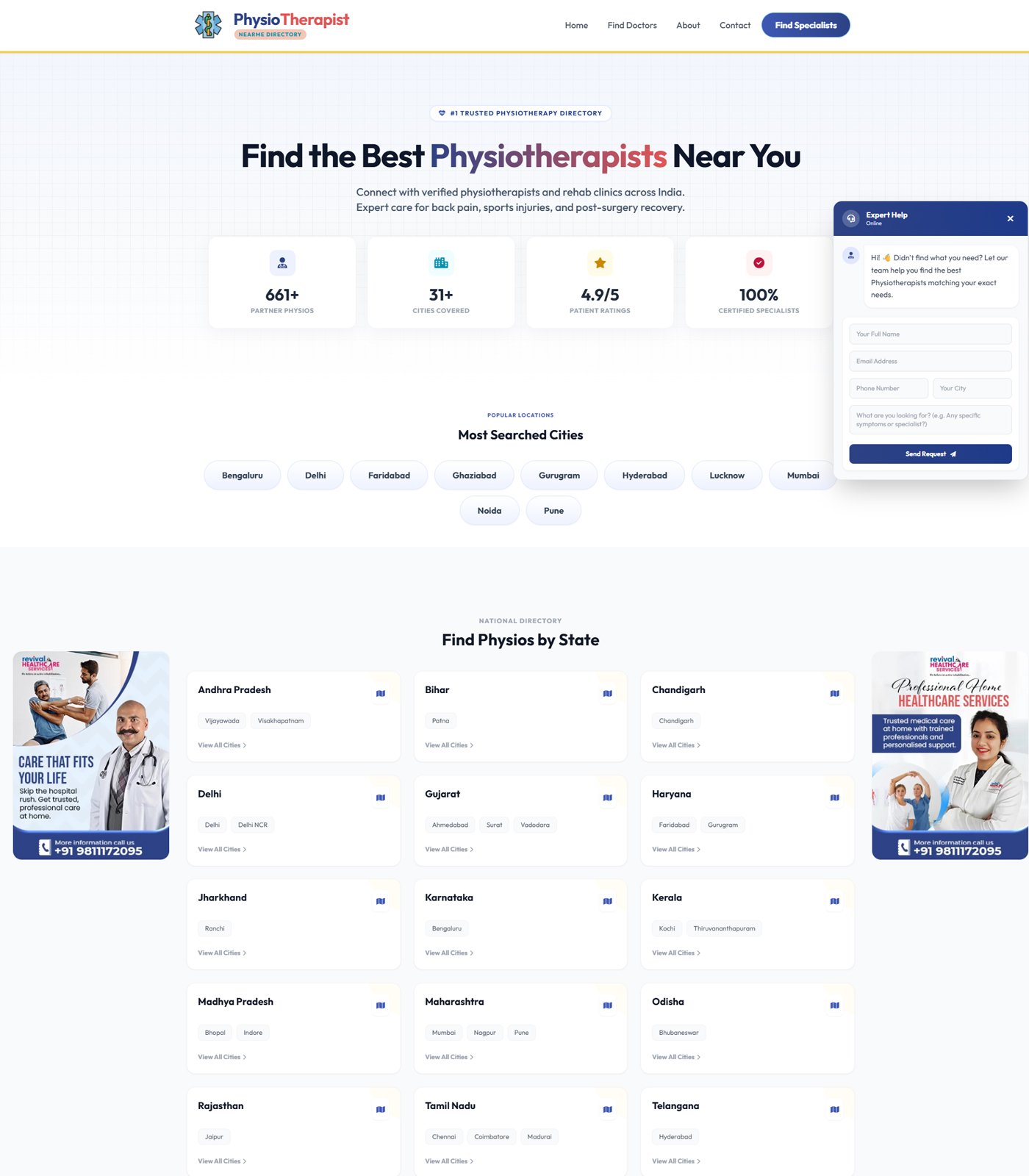
Physiotherapy directory connecting patients with partner physios across cities.
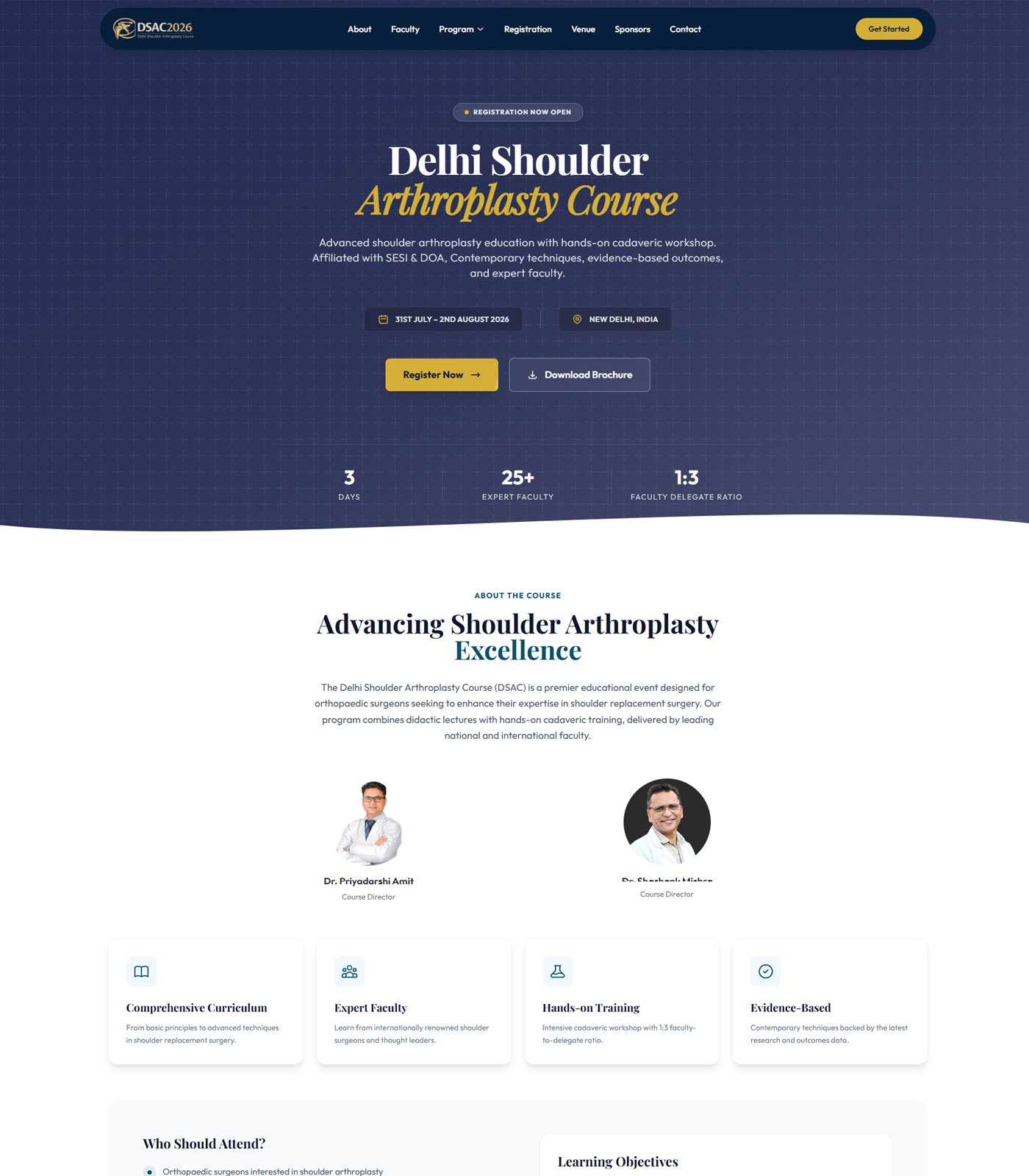
Conference registration site with faculty, program, sponsor management, and online registration.
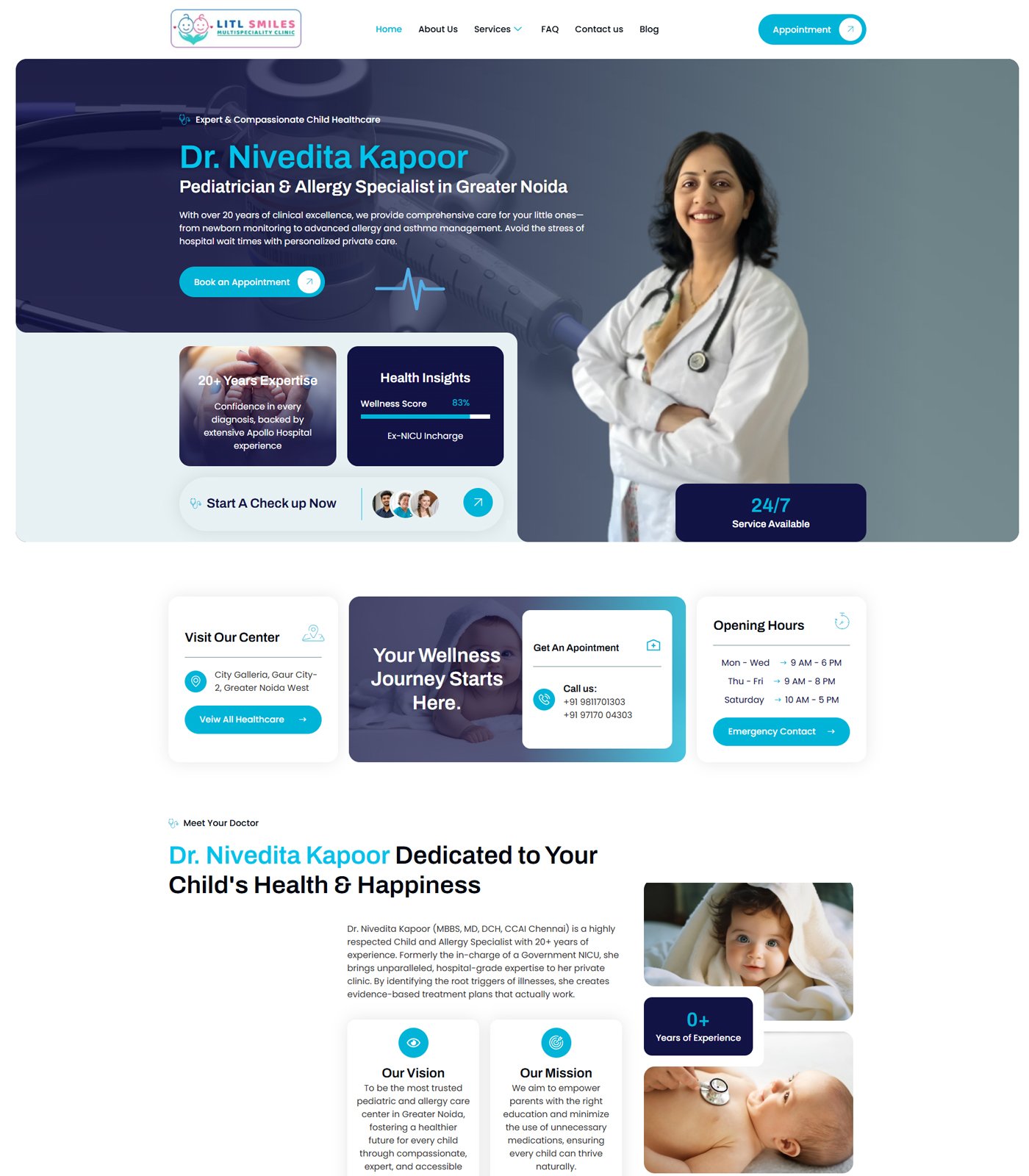
Pediatrician clinic website with service pages, appointment booking, and patient education content.
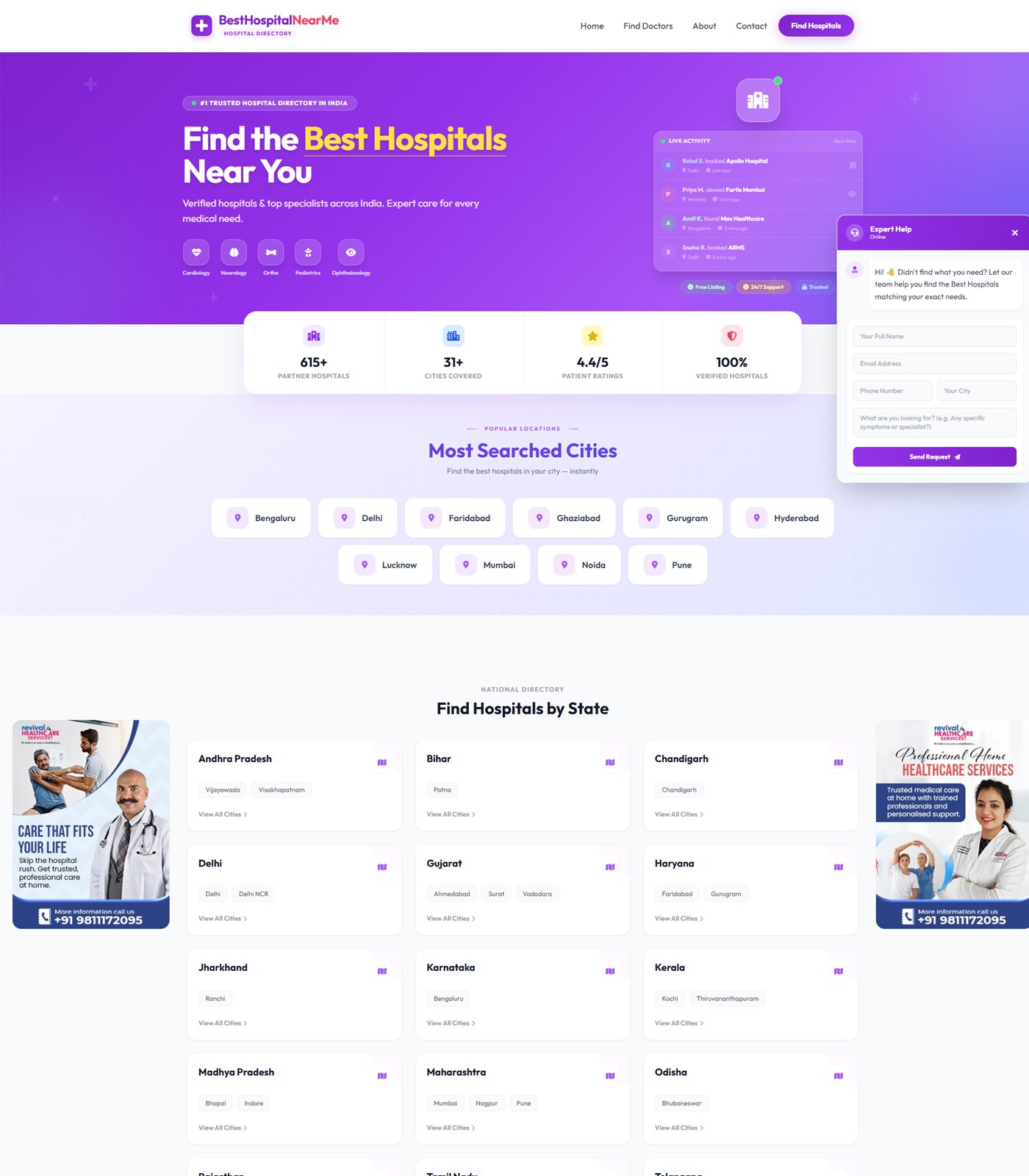
India's hospital discovery platform connecting patients with verified hospitals.
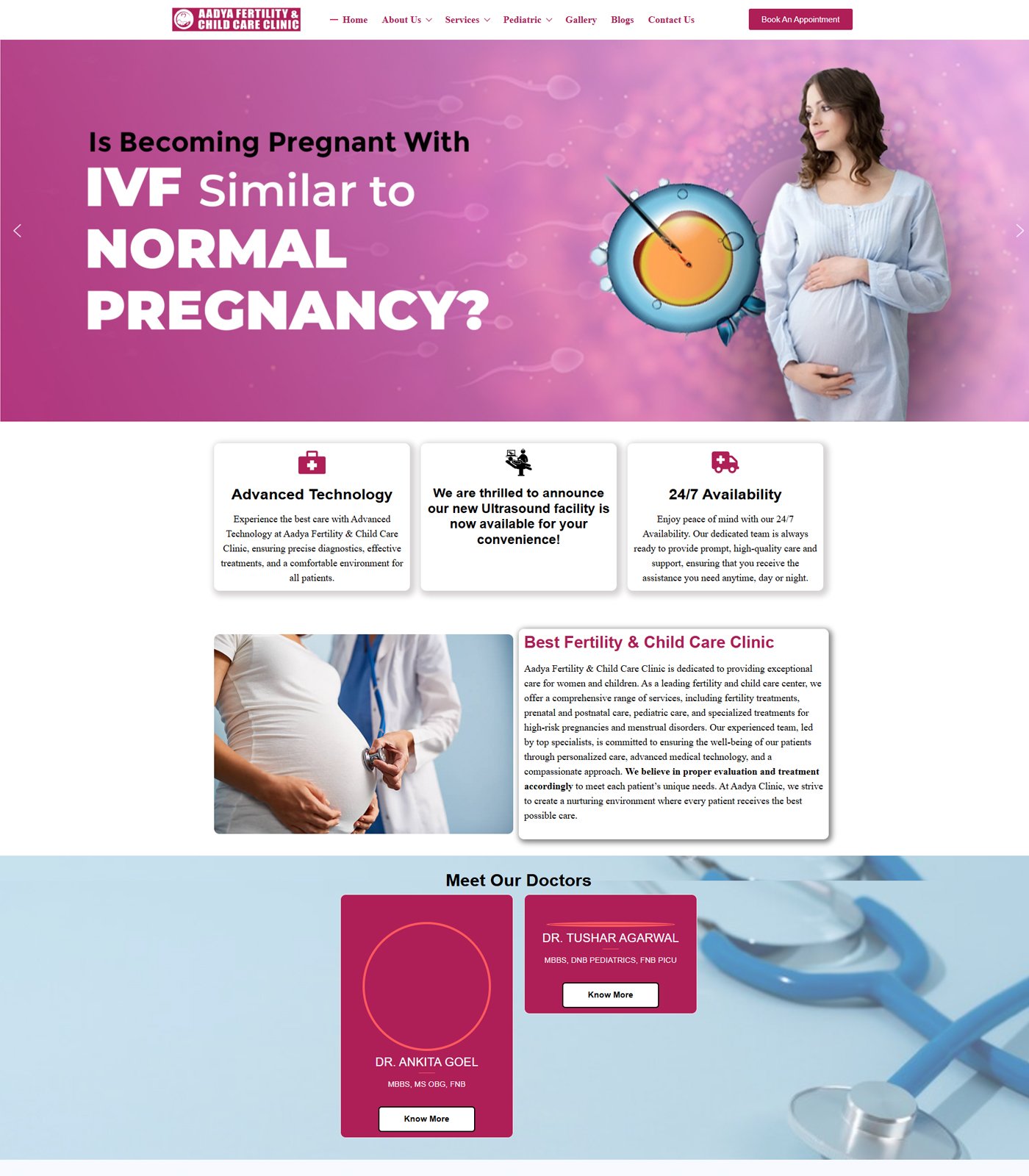
Comprehensive clinic website built with patient-first design and easy appointment booking functionality.
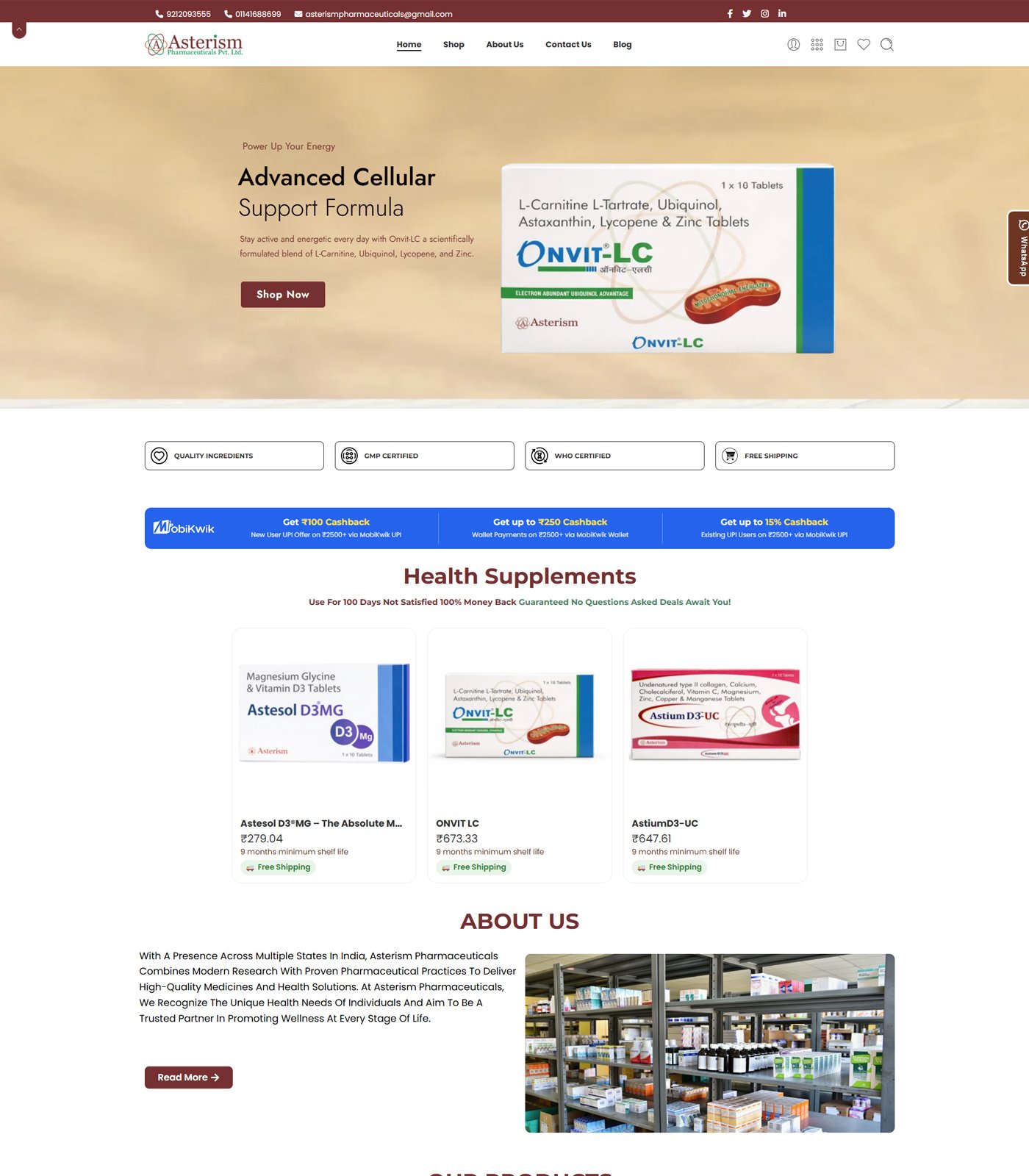
Corporate pharma website featuring product catalog, company vision, and B2B inquiry integration.
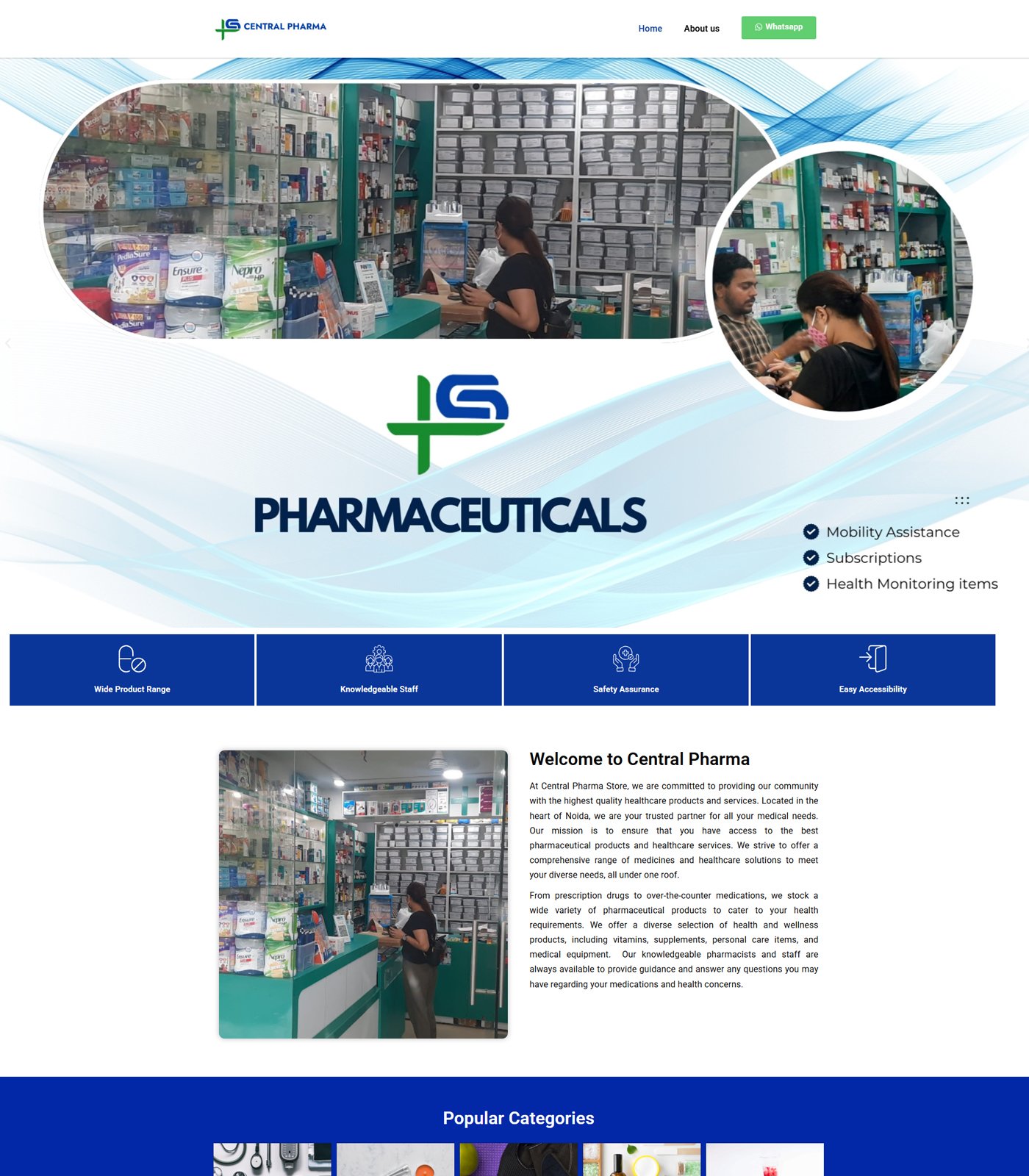
Pharmaceutical website highlighting medical products, quality standards, and distribution network.

Healthcare insights platform providing digital growth strategies for medical professionals.
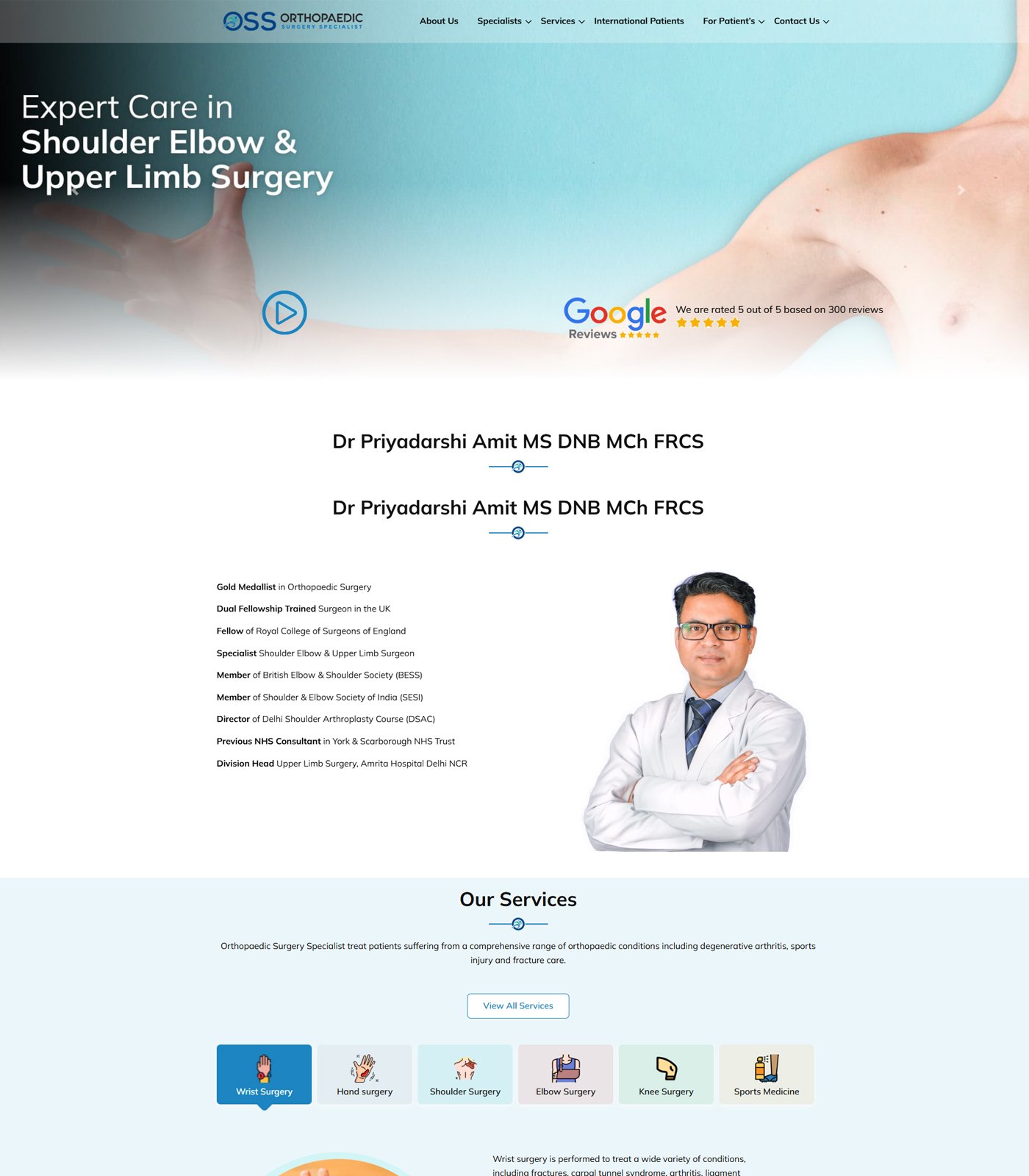
Personal website focusing on specialized medical treatments, patient testimonials, and fast consultation booking.
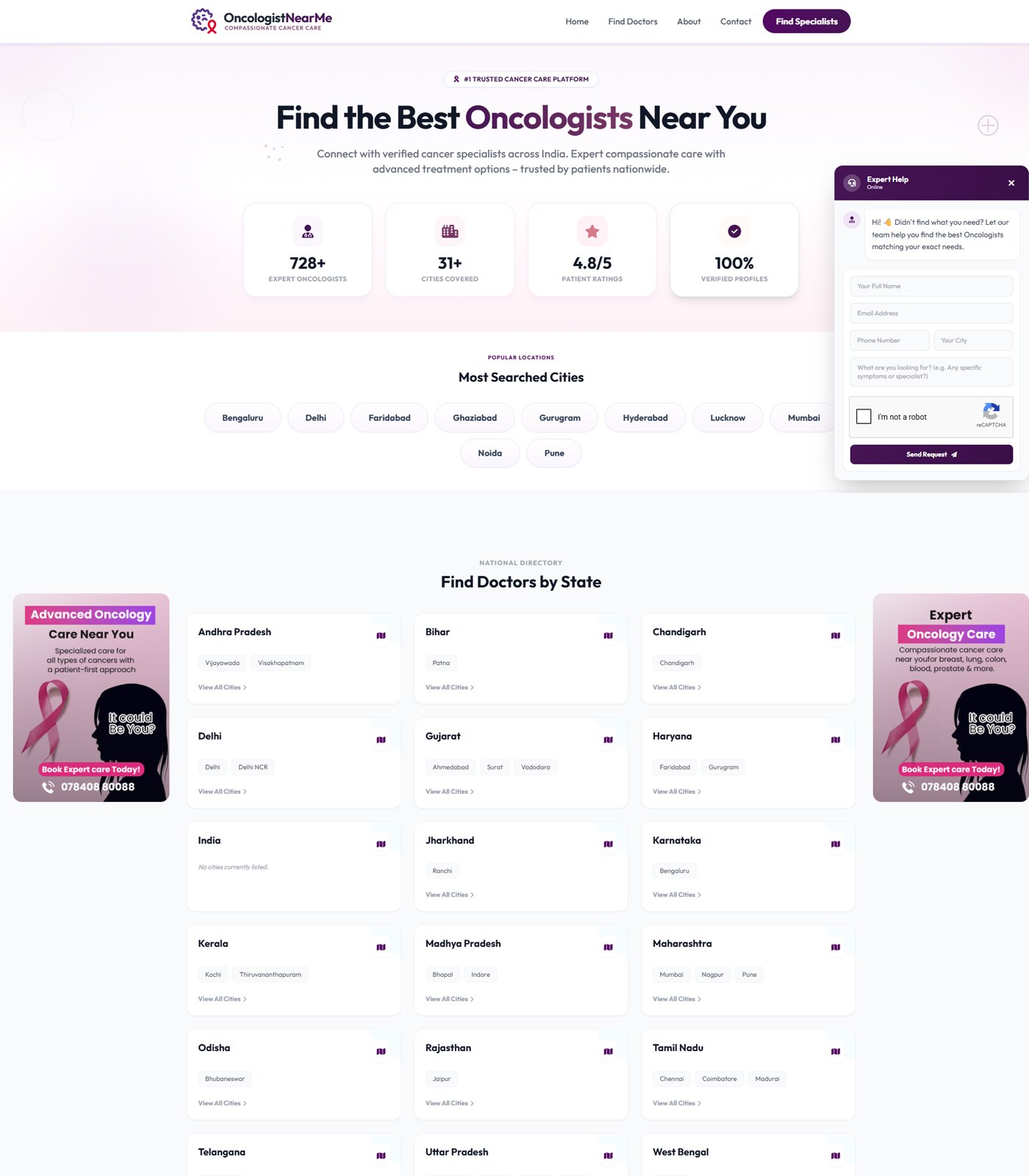
Specialized directory for cancer patients to discover top-rated oncologists and treatment centers.
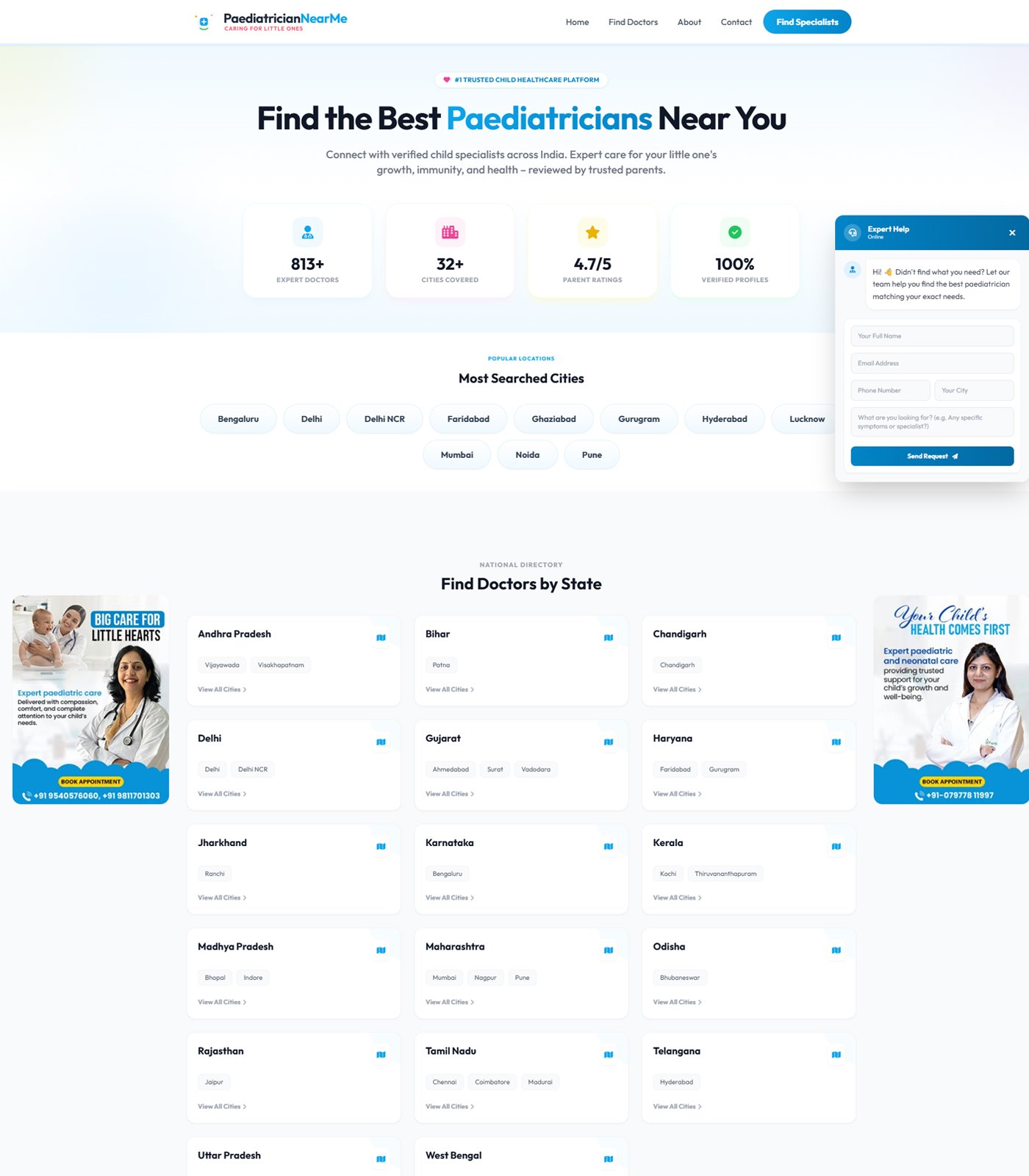
Discovery platform connecting parents with expert pediatricians and child care specialists locally.
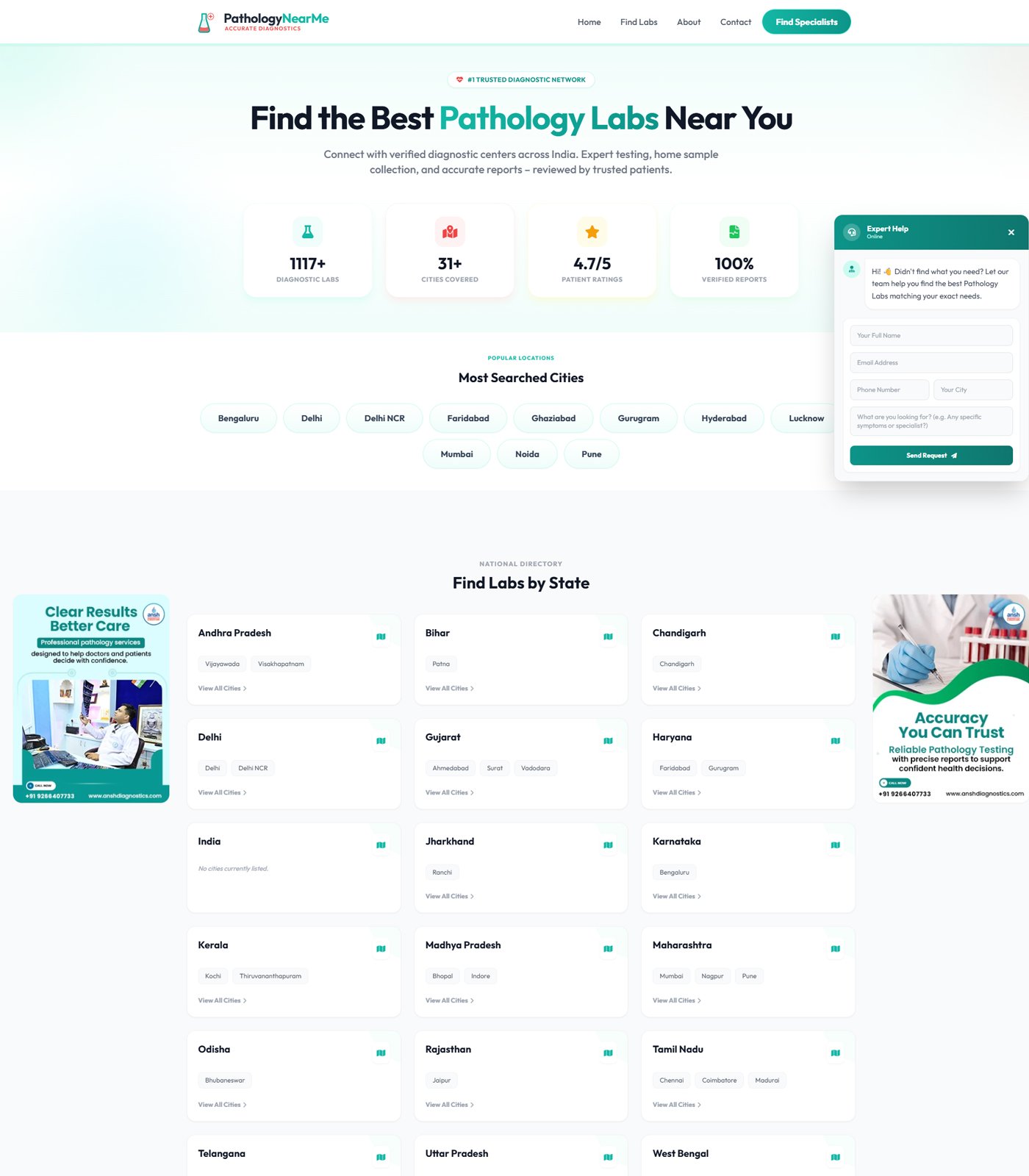
Diagnostic search platform for patients to find reliable pathology labs and book home collections.
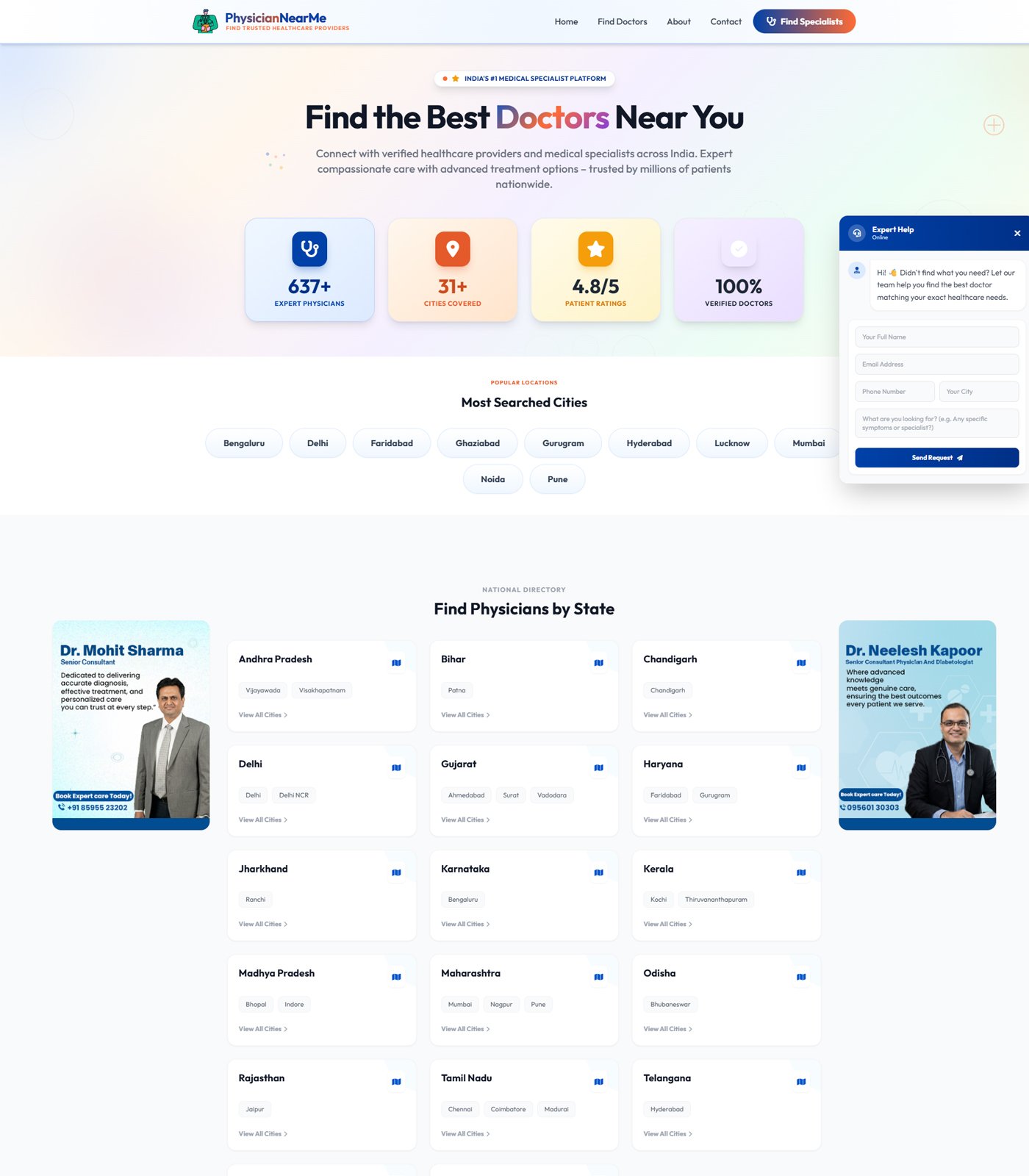
Healthcare directory helping patients locate trusted general physicians for routine care and consultations.
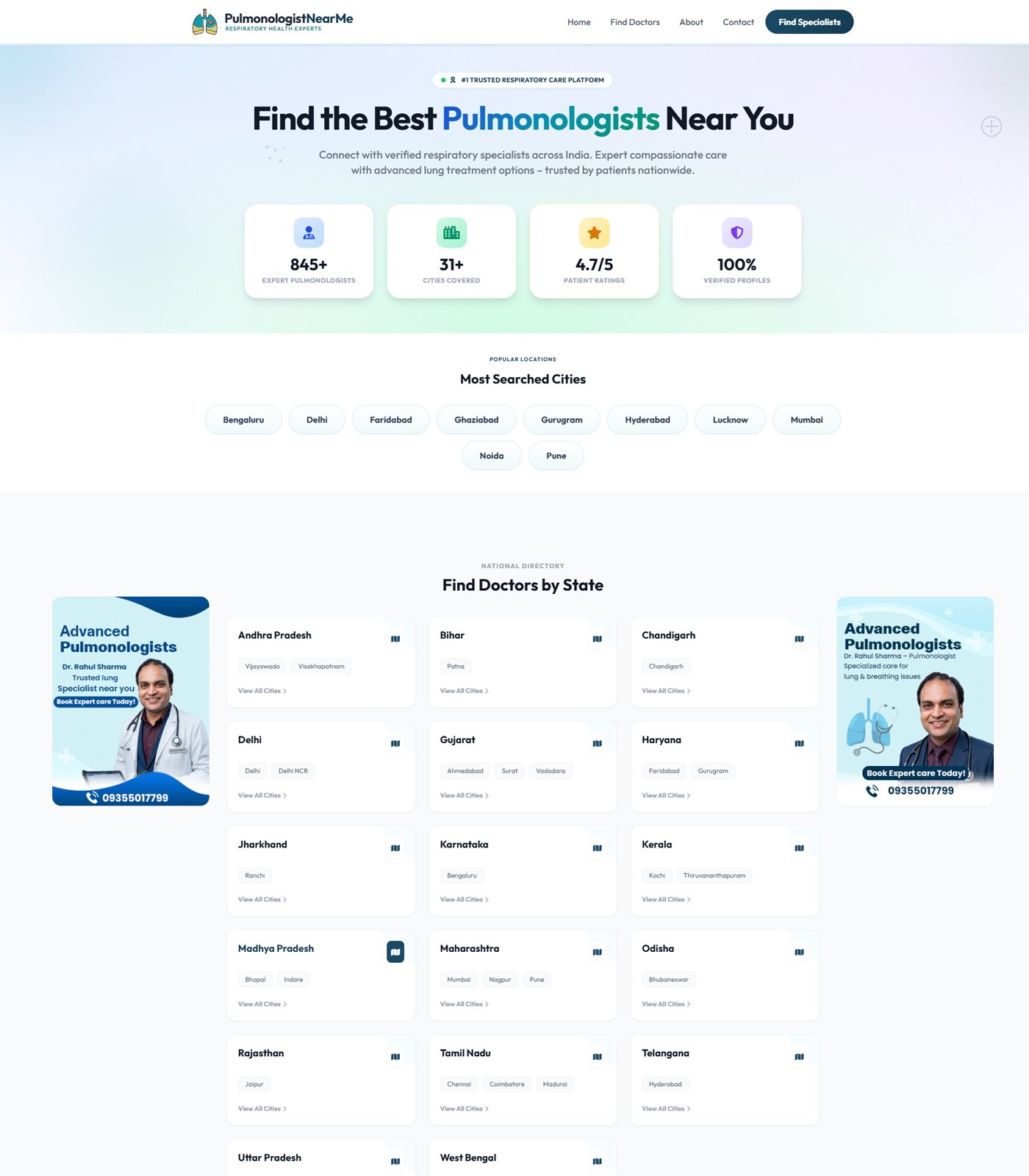
Targeted discovery platform for respiratory specialists and lung health experts.
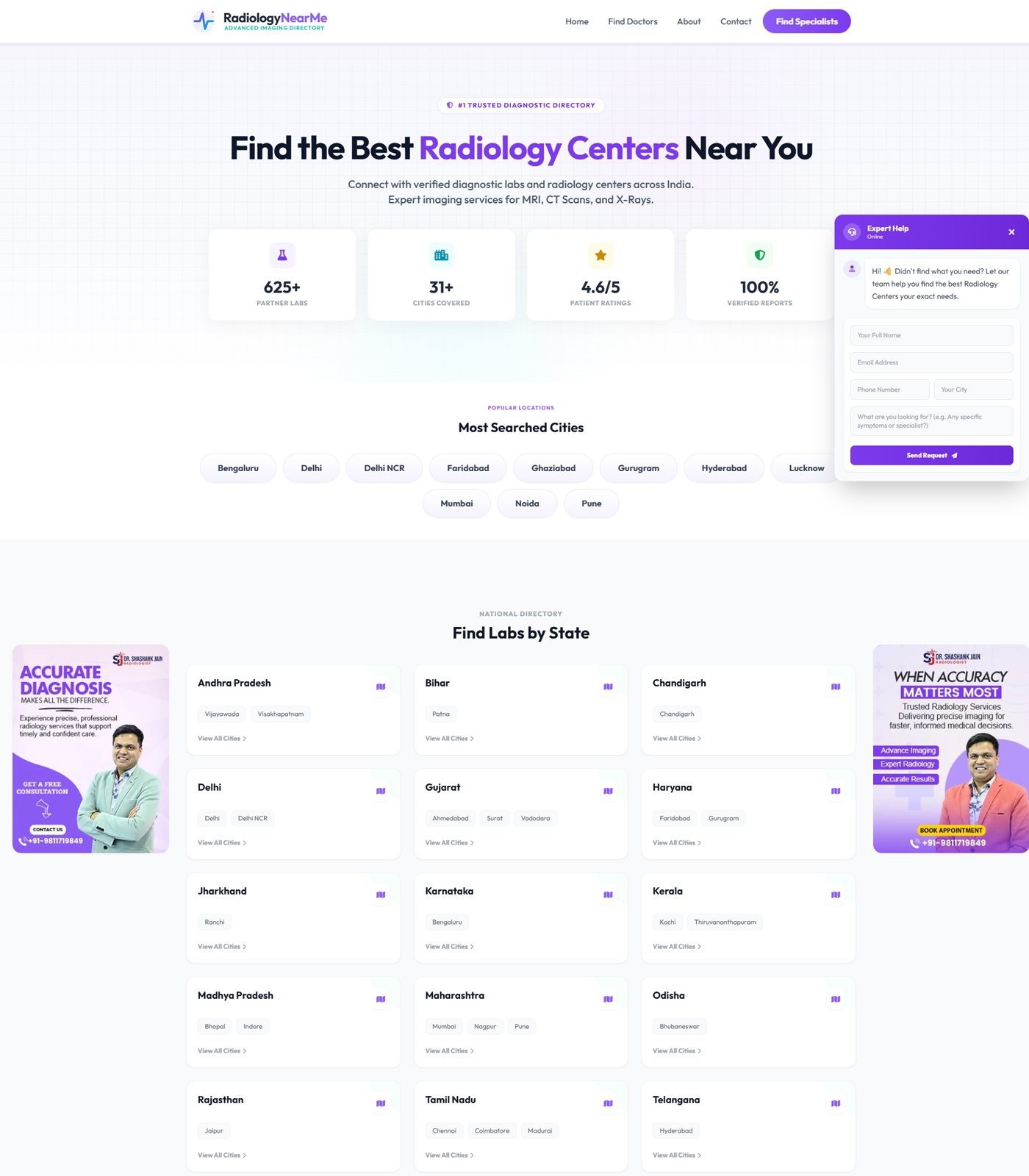
Platform for finding radiology centers, MRI, CT scans, and imaging facilities quickly.
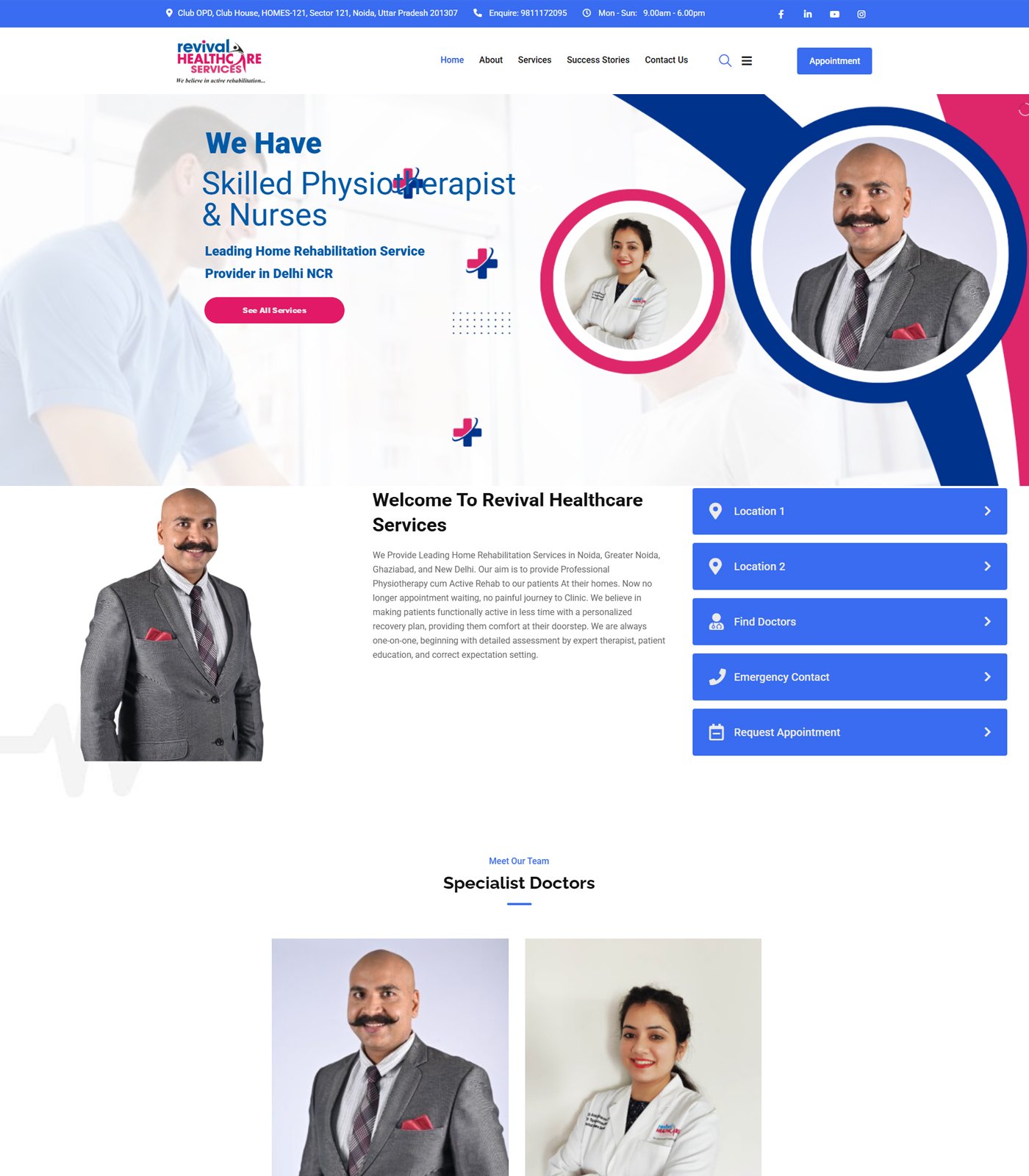
Healthcare service provider website showcasing home care, nursing, and patient support solutions.
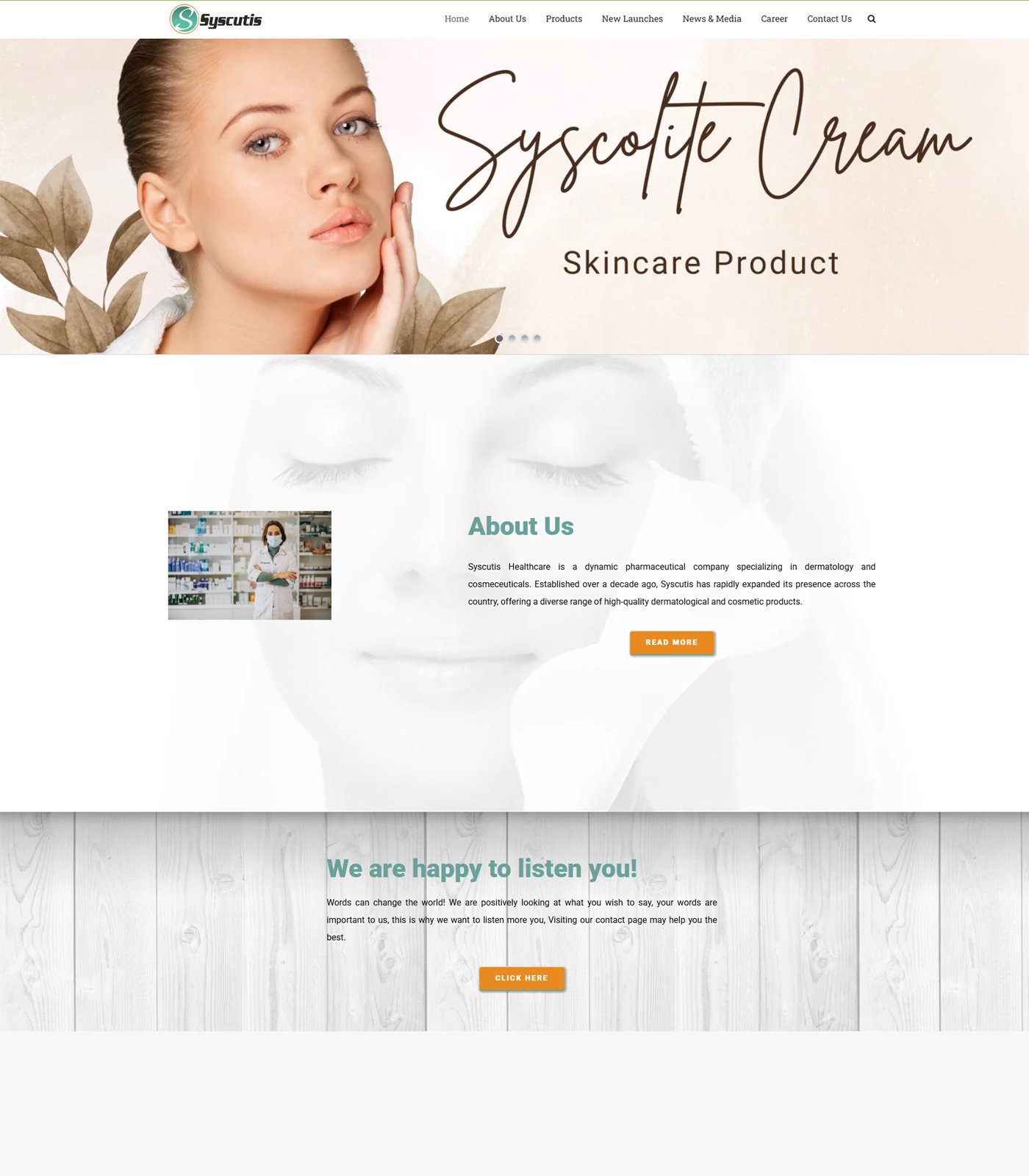
Corporate website for Syscutis, detailing dermatology products and company initiatives.
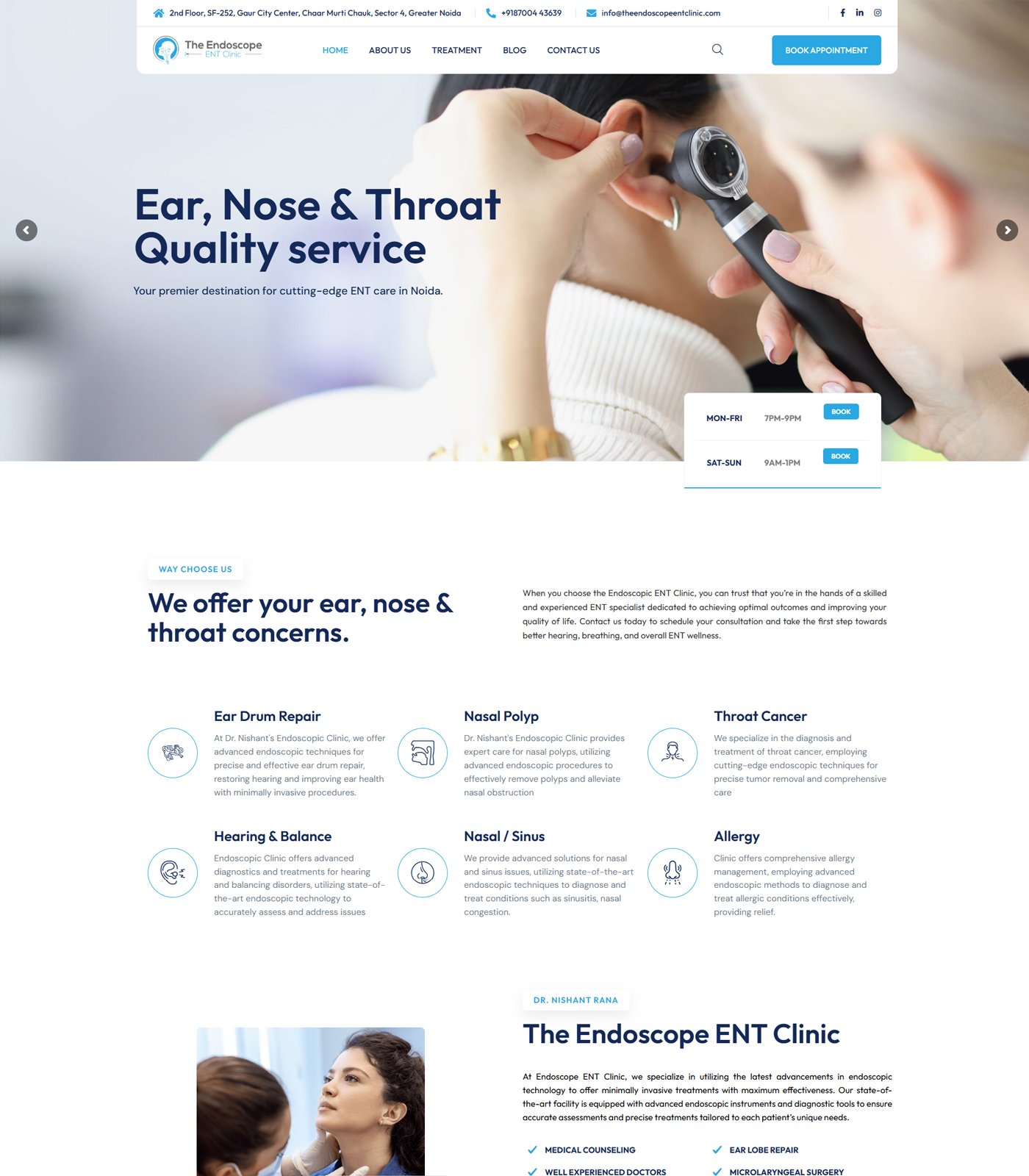
Specialized ENT clinic website featuring advanced endoscopic procedures and fast patient scheduling.
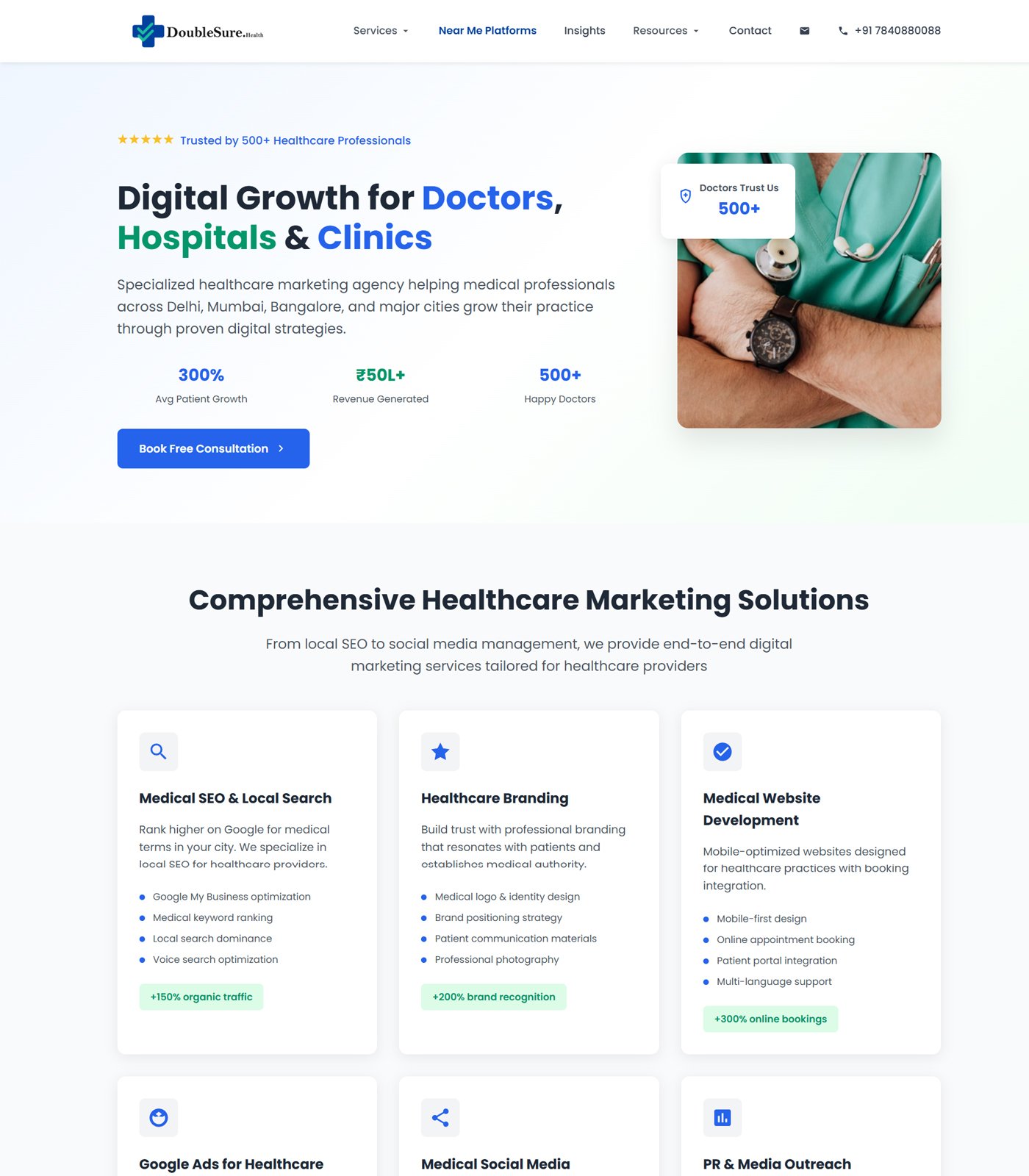
Healthcare digital infrastructure and medical marketing platform for doctors and clinics in India.
Personal brand website for the Founder & CEO of Ansh Diagnostics. Credentials, procedure pages, appointment booking, Physician schema.
Full diagnostic center platform with test booking, package e-commerce, home sample collection, and department pages.
Paramedical institute enrollment website covering 20+ courses in MLT, Radiology, OT, Yoga, and healthcare administration.
Neurosurgeon personal brand site with procedure pages, hospital affiliations, and appointment integration.
Neurosurgeon website with clinical overview, appointment booking, and Google Maps integration.
Specialty patient discovery platform for orthopaedic specialists. 1,287+ doctors, 45+ cities, 18 states covered.
High-intent neurologist discovery platform. 1,145+ expert doctors, 46+ cities covered.
Physiotherapy directory connecting patients with partner physios across cities.
Conference registration site with faculty, program, sponsor management, and online registration.
Pediatrician clinic website with service pages, appointment booking, and patient education content.
India's hospital discovery platform connecting patients with verified hospitals.
Comprehensive clinic website built with patient-first design and easy appointment booking functionality.
Corporate pharma website featuring product catalog, company vision, and B2B inquiry integration.
Pharmaceutical website highlighting medical products, quality standards, and distribution network.
Healthcare insights platform providing digital growth strategies for medical professionals.
Personal website focusing on specialized medical treatments, patient testimonials, and fast consultation booking.
Specialized directory for cancer patients to discover top-rated oncologists and treatment centers.
Discovery platform connecting parents with expert pediatricians and child care specialists locally.
Diagnostic search platform for patients to find reliable pathology labs and book home collections.
Healthcare directory helping patients locate trusted general physicians for routine care and consultations.
Targeted discovery platform for respiratory specialists and lung health experts.
Platform for finding radiology centers, MRI, CT scans, and imaging facilities quickly.
Healthcare service provider website showcasing home care, nursing, and patient support solutions.
Corporate website for Syscutis, detailing dermatology products and company initiatives.
Specialized ENT clinic website featuring advanced endoscopic procedures and fast patient scheduling.
Healthcare digital infrastructure and medical marketing platform for doctors and clinics in India.
We start with a structured discovery session — your specialty, your patient journey, your target city, your existing digital presence, your competition. From this we build the site architecture: how many pages, what each page targets, what the booking flow looks like, whether you need test booking or just appointment forms, what schema types the site needs. No template is chosen before the architecture is right. Discovery takes 3-5 days and produces a sitemap and wireframe structure before any design begins.
Design starts mobile-first. Every page is designed for the screen most patients will use. We write all content in-house — doctor profiles, procedure descriptions, service pages, FAQs — in patient-friendly language that\'s also structured for SEO. Photography is coordinated if needed (clinic interiors, doctor headshots, procedure images). No stock photos of stethoscopes on white backgrounds. Real clinical environments, real doctors, real trust signals.
Development follows the mobile-first design with full speed optimization — images compressed, fonts optimized, render-blocking scripts eliminated, lazy loading implemented. Booking integrations go in (WhatsApp, phone CTA, Calendly, Practo, or custom form). Schema markup is deployed and tested in Google\'s Rich Results Tester. Google Search Console verification, sitemap submission, and robots.txt are all configured. (For more on the realities of growing a medical practice, see: the realities of growing a medical practice into a real business)
Launch day includes: final speed test on mid-range mobile, Google Search Console indexing request for all key pages, Google Business Profile website link update, initial backlink setup (Practo, Justdial, Lybrate — linking to the new site URL), and a 30-day post-launch monitoring window. We don\'t hand over a website and disappear. The first 30 days after launch are the highest-leverage period for SEO — we stay close during this window to catch indexing issues, broken links, and performance anomalies before they compound.
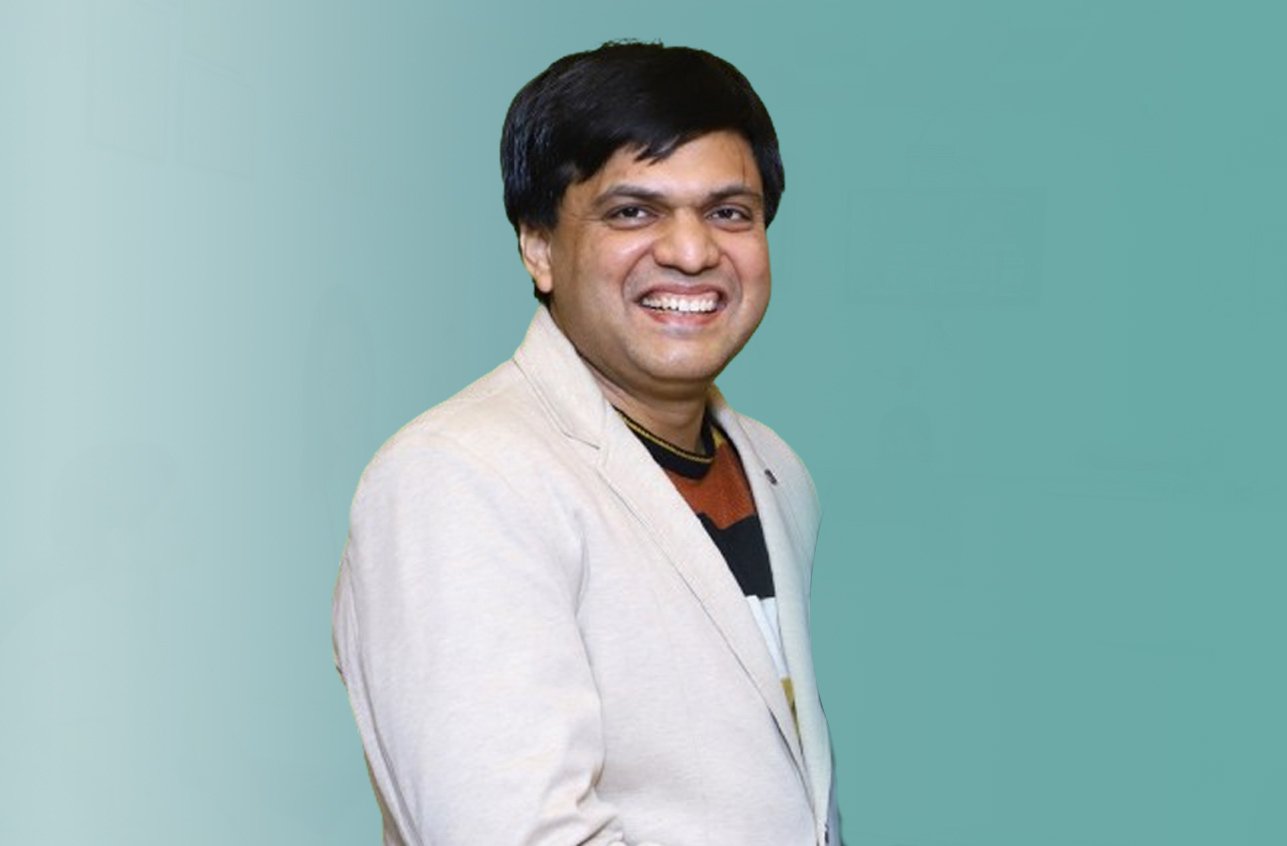
"The website DoubleSure built for Ansh Diagnostics completely changed how patients find us and book with us. We went from patients knowing us by word of mouth to patients finding us on Google, reading about the procedures, and booking online before they ever call. The increase in online bookings speaks for itself."
— Dr. Shashank Jain, Founder & CEO, Ansh Diagnostics
When Dr. Shashank Jain came to DoubleSure, he had built something most radiologists in Delhi NCR hadn't — a genuinely advanced diagnostic center with CT Guided Biopsy, full MRI and CT capabilities, Colour Doppler, Bone Densitometry, and comprehensive pathology services, all under one roof in Indirapuram, Ghaziabad. Ansh Diagnostics had been operating since 2013, serving patients across Ghaziabad, Noida, and East Delhi. Over a decade of clinical experience. A distinguished career at LNJP Hospital and GTB Hospital in Delhi. The founder of Nishkam Imaging Solutions Pvt. Ltd — one of East Delhi's most advanced imaging centers.
What the Ansh ecosystem didn't have was a digital infrastructure that matched the clinical capability.
Dr. Shashank Jain had no personal brand website — patients searching his name found directory listings and third-party profiles, none of which told the clinical story correctly. Ansh Diagnostics' website existed but was not structured for patient acquisition — no test booking, no online package purchase, no procedure-specific pages, no local SEO architecture, no schema markup. Patients looking for "CT scan Indirapuram" or "MRI center Ghaziabad" couldn't find Ansh in any meaningful search result. And AIMPS — Ansh Institute of Management and Paramedical Science, the paramedical education arm of the Ansh group — had no website at all.
DoubleSure built three websites across the Ansh ecosystem simultaneously.
Website 1: drshashankjain.com — a personal brand website for Dr. Shashank Jain as a radiologist and diagnostician. Doctor profile with full credentials, hospital affiliations, and clinical expertise. Service pages for each imaging modality — brain and spine MRI, abdominal imaging, musculoskeletal radiology, vascular Doppler. Patient testimonials. Appointment booking integration. Full schema markup including Physician entity, MedicalBusiness, and FAQPage schema. The site loads under 2.5 seconds on mobile and ranks for Dr. Shashank Jain's name and specialty across Delhi NCR search results.
Website 2: anshdiagnostics.com — a full diagnostic center platform rebuilt from scratch. Test search and booking, package e-commerce with online payment, department pages (radiology, pathology, cardiology, CT Guided Biopsy — a specialized capability few centers in the region offer), a membership program, health blog, and live appointment booking. All procedure pages are SEO-optimized for local keywords — "CT Guided Biopsy Ghaziabad," "MRI scan Indirapuram," "blood test home collection Noida." Schema markup across every key page type. The rebuilt platform turned the diagnostic center website from an information brochure into a functioning revenue channel.
Website 3: ansheducare.com — a full course-enrollment website for AIMPS. Twenty-plus certificate, diploma, and degree-level courses in Medical Laboratory Technology, Radiology Imaging Technology, Operation Theatre Technology, Yoga and Naturopathy, Ayurvedic Pharmacy, and healthcare administration. Course listing pages, student testimonials, a gallery, faculty profiles, partner logos, an active blog, and an inquiry and admission system. UGC-recognized qualifications across disciplines. Three websites, one healthcare ecosystem — diagnostic center, personal brand, and education institution — each requiring a different web architecture and serving a completely different patient or student audience.
The result DoubleSure's homepage has carried for months is a 400% increase in online bookings following the website rebuild. Patients now discover Ansh Diagnostics through organic search, book tests online, and arrive as informed, converted patients rather than walk-ins relying only on local word of mouth. The three-website ecosystem is now the template DoubleSure recommends to all diagnostic center and healthcare institution founders — personal brand site for the doctor, full-service platform for the business, education or community site for the ecosystem.
Transparency is the foundation of our partnership.
We don't build template-flipped healthcare sites. Every site starts with a discovery session and a site architecture document. If you want a generic WordPress theme with your name pasted in, we're not the right fit. If you want a site that actually converts patients, we are.
We don't use stock photos of stethoscopes on white backgrounds. Medical websites built on generic stock photography don't build patient trust. We coordinate real photography and where photography isn't possible on day one, we build the site to integrate real images as they become available.
We don't launch and disappear. A medical website needs ongoing attention — new content, updated hours, new doctors, security patches, performance monitoring. We include a 30-day post-launch support window as standard, and ongoing maintenance is available as a standing service.
We don't separate design from SEO. Local SEO architecture, schema markup, speed optimization, and structured content are built into the development process — not added as an afterthought by a different team.
We don't work with non-healthcare clients. Medical website development has unique requirements — NMC compliance considerations, patient-first UX, appointment flow design, clinical content standards. We've focused our entire process around healthcare, and we don't dilute that by taking on e-commerce or real estate websites on the side.
Get a free website audit. We'll review your current site's speed, booking flow, local SEO architecture, schema markup, and mobile experience — and tell you exactly what's working, what's broken, and what a properly built medical website would look like for your specialty. No obligation, no sales pitch.
Book a Free Website Audit